Personal Finance · Unit 1: Earning Money and Careers · Complete Toolkit
Hourly vs Salary: Which Job Actually Pays More?
What's inside
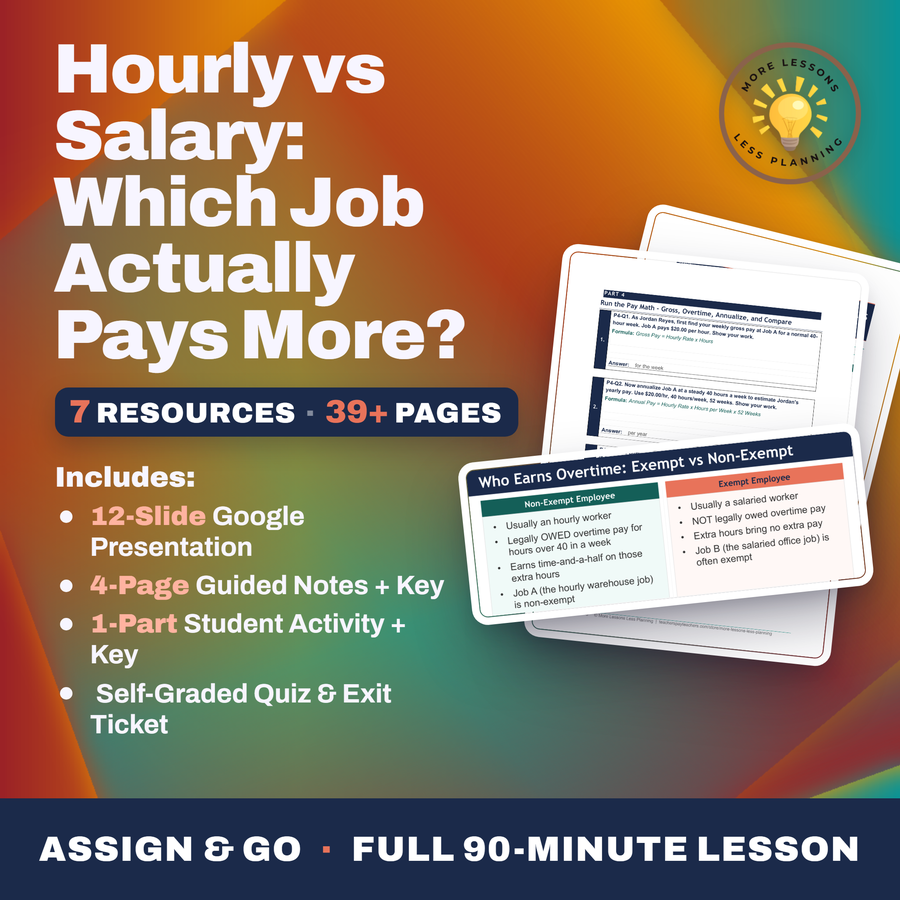
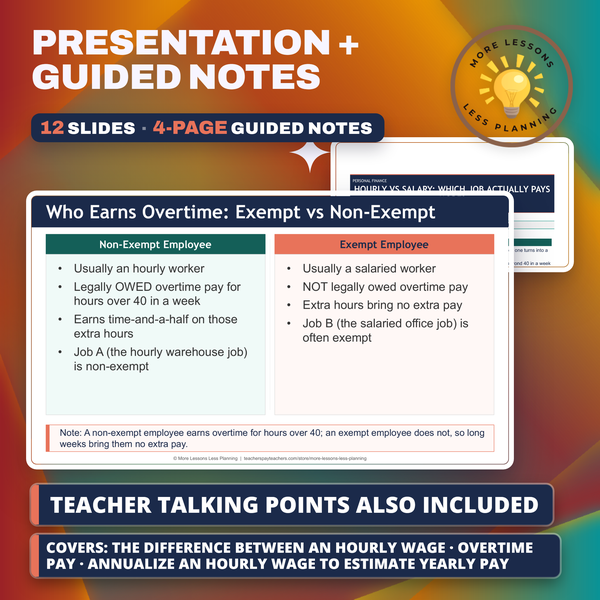
- Slide deck
- Guided notes
- Guided notes teacher key
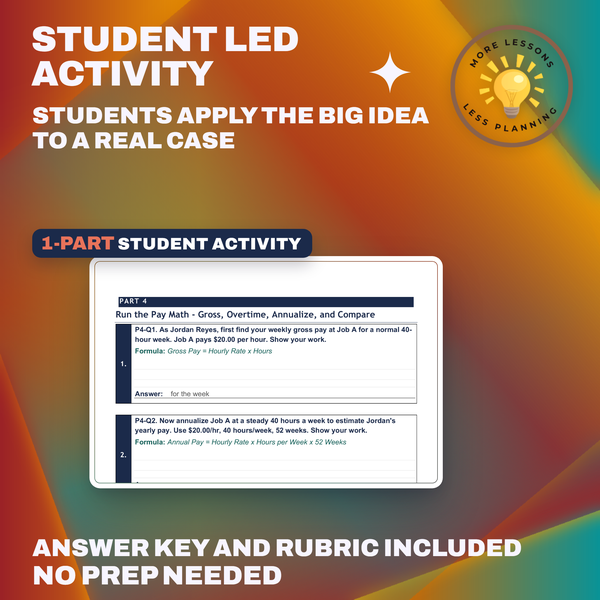
- Activity + answer key
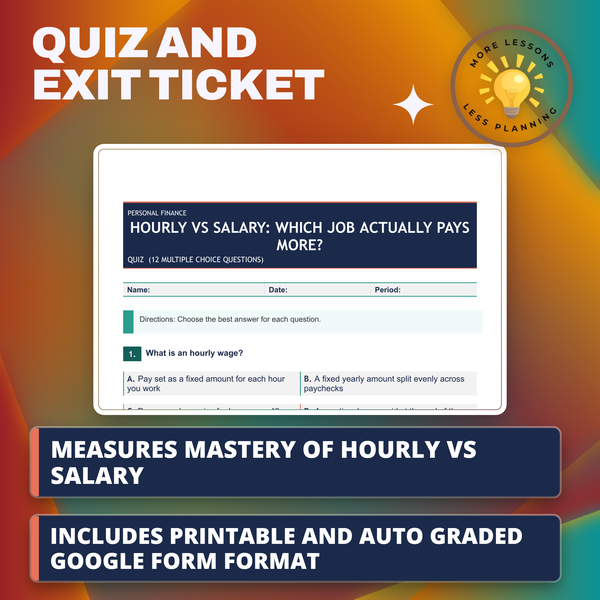
- Quiz + answer key
- Exit ticket + answer key
- Teacher guide
- Teacher presentation notes
Free
Get the Slides
Where should I send the next one?
Everything here is free and it stays that way. Leave your email and I'll send you the new lessons as they go up. You can unsubscribe from any one of them.
Every file in this toolkit has its own page below, with the download on it. Nothing to unzip and no account to make.
Every file in this toolkit
11 files
Related resources
Unit 6: Saving and Investing
Bonds - Lending to Governments and Companies
Unit 10: Smart Consumer and Financial Safety
Financial Goals - Short, Medium and Long Term
Unit 8: Insurance and Risk
Health Insurance - The Most Confusing Bill You'll Get

Unit 10: Smart Consumer and Financial Safety
Impulse Buying - How Stores Trick You

Unit 5: Loans and Debt
Loan Default - What Happens When You Can't Pay
Unit 9: Major Purchases and Independent Living
Negotiating Big Purchases: Getting a Better Deal
Fact-checked and print-tested before it went on the shelf. How we verify →
Fits: Personal Finance, Financial Literacy, Economics · grades 9-12 · 1-2 class periods
What students do
- Calculate overtime pay at time-and-a-half for hours worked beyond 40 in a week
- Annualize an hourly wage and convert a salary back to an hourly equivalent
- Read a grouped bar chart to find where hourly pay overtakes a flat salary
- Compare two real job offers and decide which one actually pays more
What it covers
- The difference between an hourly wage and a salary, and how each becomes a paycheck
- Overtime, time-and-a-half, and the 40-hour threshold that triggers it
- Exempt vs non-exempt status and why it changes who earns overtime
- The math for putting an hourly job and a salary on the same yearly footing
Learning targets
- Explain the difference between an hourly wage and a salary and how each one turns into a paycheck
- Calculate overtime pay using the time-and-a-half rate for hours worked beyond 40 in a week
- Annualize an hourly wage to estimate yearly pay and convert a salary back to an hourly equivalent
- Compare two real job offers - one hourly, one salaried - and decide which one actually pays more based on hours worked
From one teacher to another
Two job offers that look almost identical on paper hide the real trap I want students to run into. They annualize an hourly wage, price out overtime at time-and-a-half, and watch the "obvious" higher number lose once the hours change. By the end they're running the math themselves instead of just picking the bigger paycheck.
Every lesson on this site is free to download and use. If one of them saved you a prep period, you can chip in a few bucks toward my three kids' daycare fund. That's genuinely where tips go.