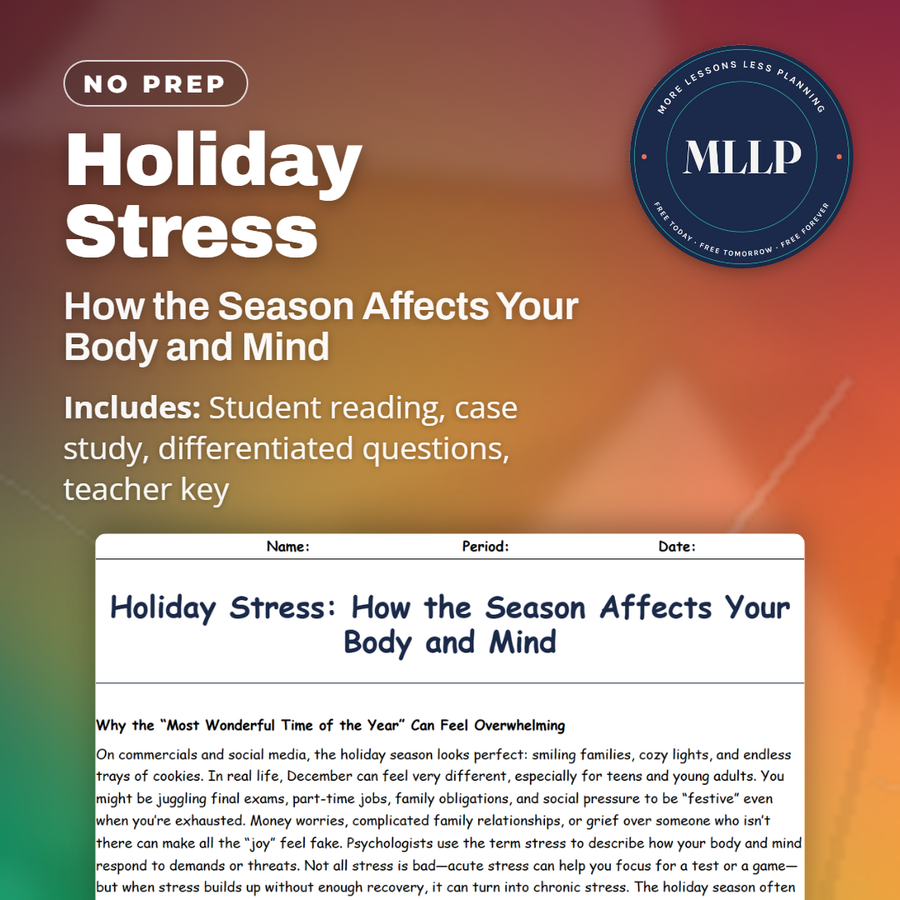
Holiday Stress: How the Season Affects Your Body and Mind
Quality reviewed September 2026
Facts verified September 9, 2026
- Subject
- Health & PE
- Grades
- Grades 9-12
- Length
- 8-page student worksheet
- Time
- About one 50-minute class period
- Great for
- Sub plans and independent work
- Includes
- Reading passage, comprehension questions + full answer key
- Format
- Print-and-go PDF
What students do
- Explain how chronic stress activates cortisol and affects sleep, immunity, and mood
- Compare physical and emotional signs of holiday stress versus everyday pressure
- Trace how skipping meals, scrolling social media, and overcommitting build stress
- Evaluate coping skills and boundaries as tools to protect mental and physical health
What it covers
- Stress, nervous system, and fight-or-flight response
- Holiday routines and immune system impact
- Mental health, coping, and personal boundaries
Start reading this worksheet
Why the “Most Wonderful Time of the Year” Can Feel Overwhelming
On commercials and social media, the holiday season looks perfect: smiling families, cozy lights, and endless trays of cookies. In real life, December can feel very different, especially for teens and young adults. You might be juggling final exams, part-time jobs, family obligations, and social pressure to be “festive” even when you’re exhausted. Money worries, complicated family relationships, or grief over someone who isn’t there can make all the “joy” feel fake. Psychologists use the term stress to describe how your body and mind respond to demands or threats. Not all stress is bad—acute stress can help you focus for a test or a game—but when stress builds up without enough recovery, it can turn into chronic stress. The holiday season often combines multiple stressors at once: crowded schedules, travel, changes in routine, and higher expectations from family and friends. Even positive events like parties and gift exchanges can add pressure to look a certain way, spend money you don’t have, or socialize when you’d rather recharge. It’s important to remember that holiday stress doesn’t mean you’re ungrateful or “ruining it” for others. It means your nervous system and emotions are reacting to real demands. Understanding what’s happening inside your body and mind is the first step toward handling the season in a healthier way. Instead of blaming yourself for not feeling constantly cheerful, you can start asking better questions: What’s stressing me out? What can I control? And what do I need to stay well during this time?
What Stress Does Inside Your Body
When you feel stressed—whether from an argument at dinner or a pile of late assignments—your body activates the fight-or-flight response. Your brain’s amygdala sounds an alarm, and the hypothalamus sends signals to release stress hormones like adrenaline and cortisol. Your heart rate increases, your breathing speeds up, and blood is directed toward large muscles so you can react quickly. In a short-term emergency, this response can be lifesaving. During the holiday season, though, the stress response may be triggered over and over by non-emergency situations: running late for a shift, worrying about gifts, dealing with family conflict, or seeing everyone else’s “perfect” life online. When cortisol stays high for too long, it can interfere with sleep, immune function, and mood. You might notice more headaches or stomachaches, feel on edge, or have trouble concentrating. Some people cope by overeating, oversleeping, or withdrawing; others may turn to substances like alcohol or vaping, which can make stress worse in the long run. Here is a quick summary of how holiday stress can show up: This table isn’t meant to diagnose you, but to give you language for what you might already feel. When you can name a stressor and recognize your body’s reaction, you are better able to choose a healthier response instead of just reacting on autopilot.
Holiday Habits: Sleep, Food, and Social Media
One reason holiday stress builds up is that healthy routines quietly fall apart. Sleep is often the first casualty. Late-night studying, parties, travel, or gaming can push your bedtime later and later. Your body’s circadian rhythm, which relies on regular light–dark cycles, becomes confused. When you sleep less, your brain has a harder time regulating emotions, making small problems feel huge. Food patterns can also shift. Holiday meals are not “bad,” but constant snacking, skipping regular meals, or treating every day like a feast can leave you sluggish. High sugar and caffeine intake may give quick bursts of energy followed by crashes, increasing irritability and anxiety. On the opposite side, some people eat less when stressed, which can lead to low energy and difficulty focusing. The goal isn’t a “perfect” diet; it’s a pattern that keeps your blood sugar and energy relatively stable. Then there’s social media. During the holidays, people tend to post the best version of their lives: highlight reels of gifts, vacations, and happy families. If you’re already stressed, it’s easy to compare your real life to someone else’s edited photos and feel like you’re failing. Psychologists call this social comparison, and research suggests it can increase symptoms of depression and anxiety, especially when you believe everyone else is doing better than you. Taking short breaks from scrolling, unfollowing accounts that make you feel worse, and remembering that posts are curated, not complete reality, can protect your mental health.
Like what you read? The full reading, the case study, and every question set are in the free download below, along with the answer key.
Why this matters
By the first week of December, Kayla's calendar had no open space left: finals, shifts, and family plans stacked on top of each other, and every phone notification made her shoulders tighten before she even read it.
I watch students describe stress as just a mood, not something happening physically inside them, so walking through what cortisol does to sleep and immunity finally gives them language for what they're already feeling. Recognizing the physical signs early, tight shoulders, skipped meals, going numb by the end of a long day, is what makes a boundary or a scheduled break feel necessary instead of optional.
From one teacher to another
By the first week of December, Kayla's calendar was full. Finals, job shifts, family dinner planning. Every phone buzz tightened her shoulders. She scrolled friends' perfect holiday photos, skipped lunch to study, accepted extra shifts, and told herself to just push through. By the holiday dinner, she was numb, hiding in the kitchen with earbuds. This worksheet uses her story to teach what chronic stress actually does inside your body, cortisol, sleep disruption, weakened immunity, emotional numbness. Students identify their own stressors, recognize what their body is signaling, and practice real coping skills like boundaries and time management instead of just white-knuckling through.
What you get
Download
Where should I send the next one?
Everything here is free and it stays that way. Leave your email and I'll send you the new lessons as they go up. You can unsubscribe from any one of them.
Related resources
Biology of Evergreen Plants: The Science Behind Christmas Trees
Body Clocks and Midnight Countdowns: Circadian Rhythms at New Year’s
Calendars, Orbits, and the Science of New Year’s Day
Christmas on the Home Front: WWII Rationing and Resilience
Colorful Chemistry: Holiday Lights, Fireworks, and the Science of Glow
Crowded Skies: Holiday Air Travel and the Environment
Every lesson on this site is free to download and use. If one of them saved you a prep period, you can chip in a few bucks toward my three kids' daycare fund. That's genuinely where tips go.