
Blitzkrieg and the Fall of France
- Slide deck
- Guided notes
- Guided notes teacher key
- Activity + answer key
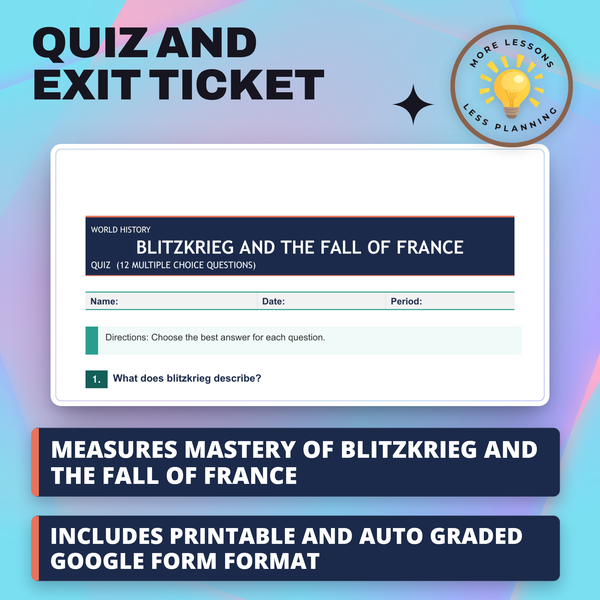
- Quiz + answer key
- Exit ticket + answer key
- Teacher guide
- Teacher presentation notes
Where should I send the next one?
Everything here is free and it stays that way. Leave your email and I'll send you the new lessons as they go up. You can unsubscribe from any one of them.
Every file in this toolkit
Related resources
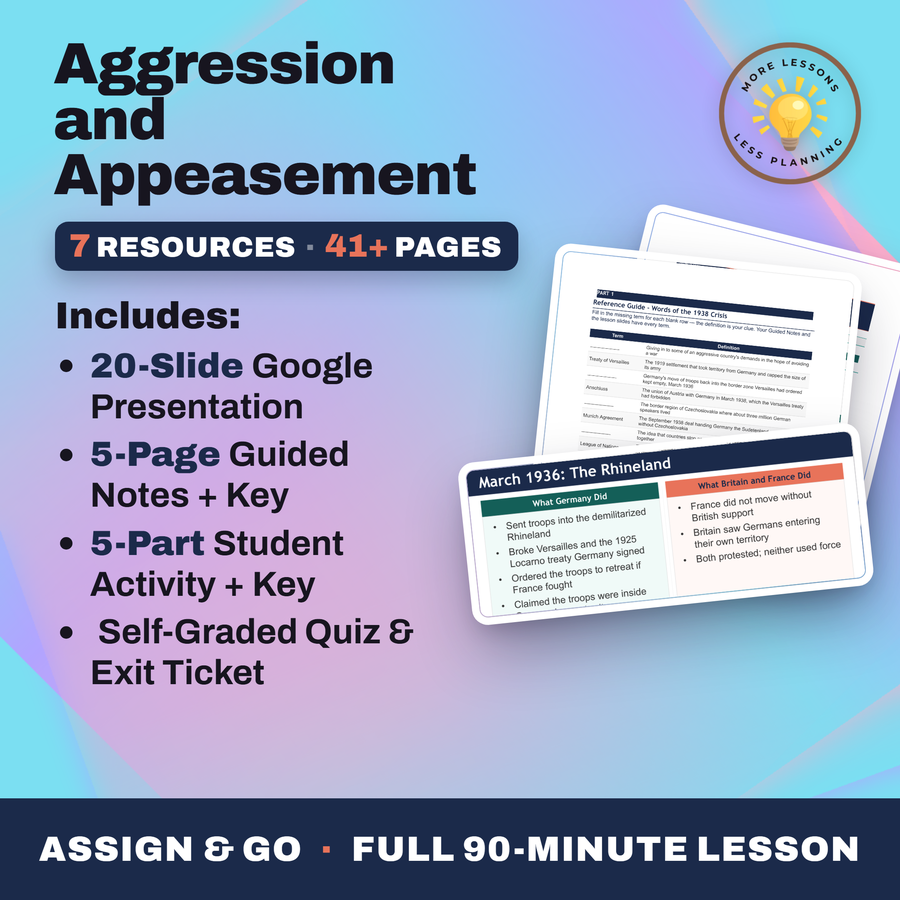
Aggression and Appeasement
D-Day and the Liberation of Europe
The Battle of Britain
The War Ends
War in the Pacific
Alliances and the Causes of WWI
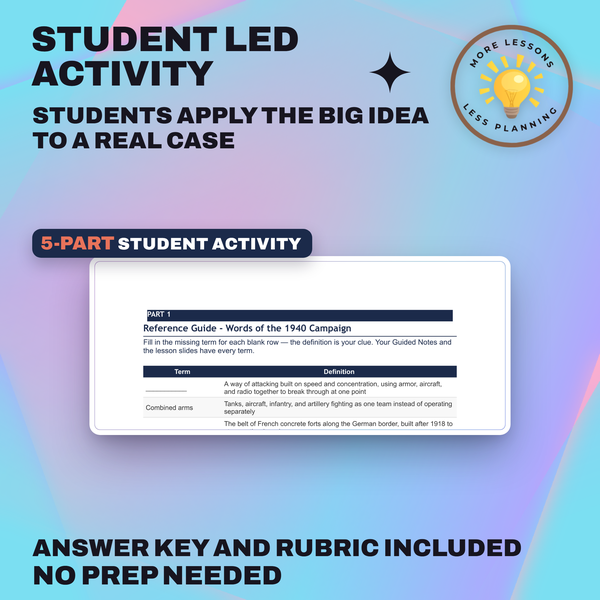
What students do
- Compare French and German tank numbers to explain why France lost despite fielding more tanks
- Trace the German advance from the Meuse crossing at Sedan on May 13 to the Channel at Abbeville on May 20
- Analyze Ambassador Bullitt's May 15, 1940 telegram describing the "hernia" growing at Sedan
- Explain why the Maginot Line was bypassed through the Ardennes rather than broken
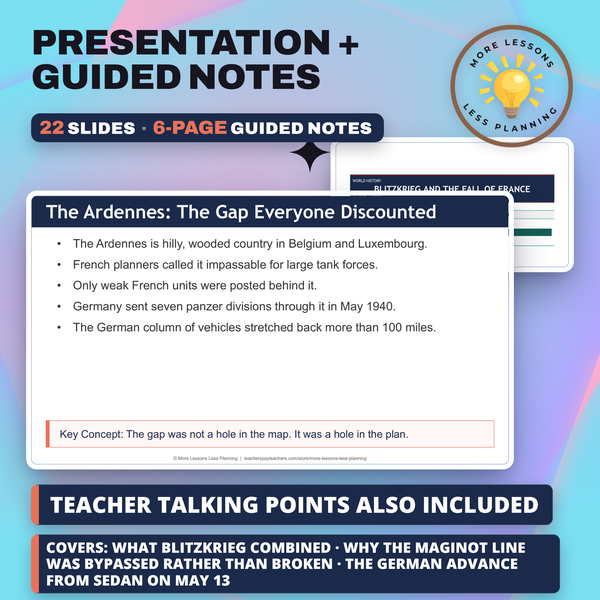
What it covers
- What blitzkrieg actually combined, from massed armor and close air support to radio-coordinated tempo
- Why French planners judged the Ardennes impassable for tanks and left it lightly defended
- How six weeks separated the May 10 invasion from the June 22 armistice at Compiegne
Learning targets
- Explain what blitzkrieg combined: massed armor, air support, radio, and speed.
- Explain why the Maginot Line was bypassed rather than broken in May 1940.
- Trace the German advance from Sedan on May 13 to the English Channel on May 20.
- Analyze an American ambassador's telegram describing the German breakthrough.
- Explain why France lost to tempo and concentration rather than to numbers.
From one teacher to another
Students walk in assuming World War II moved slowly because World War I did, so the speed of the fall of France is usually the first real surprise of the unit. This lesson is built around that shock, and it doesn't let the mechanics of this new way of fighting take a backseat to the outcome. It is the second lesson in my World War II unit, following aggression and appeasement, so students already have the diplomatic failure in hand before they see what the resulting war looked like on the ground.
Every lesson on this site is free to download and use. If one of them saved you a prep period, you can chip in a few bucks toward my three kids' daycare fund. That's genuinely where tips go.