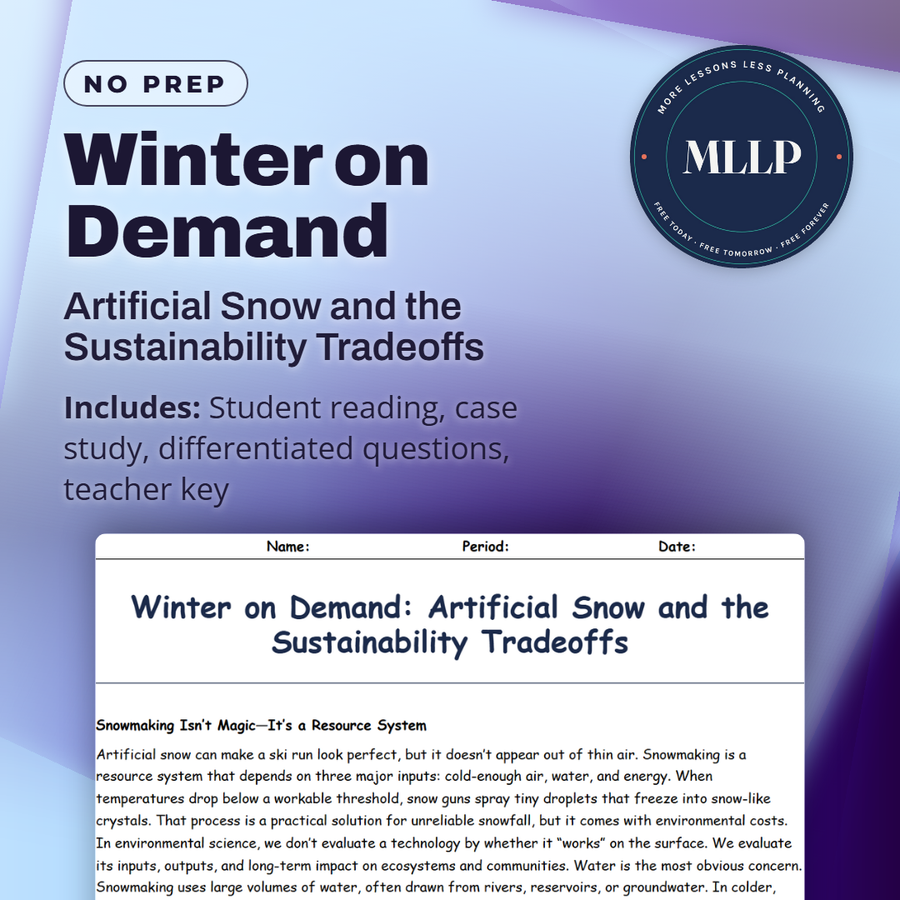
Winter on Demand: Artificial Snow and the Sustainability Tradeoffs
Quality reviewed September 2026
Facts verified September 9, 2026
- Subject
- Science
- Grades
- Grades 9-12
- Length
- 8-page student worksheet
- Time
- About one 50-minute class period
- Great for
- Sub plans and independent work
- Includes
- Reading passage, comprehension questions + full answer key
- Format
- Print-and-go PDF
What students do
- Analyze three resource systems that snowmaking depends on and how each creates environmental pressure
- Evaluate "sustainability claims" by checking what impacts are measured and what is ignored
- Trace water withdrawal consequences to timing, ecosystems, and community needs
- Compare hosting priorities based on natural winter conditions and infrastructure resilience
What it covers
- Snowmaking resource systems and environmental impacts
- Sustainability accounting and greenwashing
- Water management and ecosystem timing
Start reading this worksheet
Snowmaking, Not Magic: A Resource System
Artificial snow can make a ski run look perfect, but it doesn’t appear out of thin air. Snowmaking is a resource system that depends on three major inputs: cold-enough air, water, and energy. When temperatures drop below a workable threshold, snow guns spray tiny droplets that freeze into snow-like crystals. That process is a practical solution for unreliable snowfall, but it comes with environmental costs. In environmental science, we don’t evaluate a technology by whether it “works” on the surface. We evaluate its inputs, outputs, and long-term impact on ecosystems and communities. Water is the most obvious concern. Snowmaking uses large volumes of water, often drawn from rivers, reservoirs, or groundwater. In colder, wetter regions, that might be manageable. In warmer or drier regions, it can create conflicts with municipal water needs, agriculture, and wildlife. Water withdrawals can affect stream flow and aquatic habitats, especially during low-water seasons. Even if water is returned later through melt, timing matters. Removing water during critical periods can stress ecosystems. Energy is the second major concern. Snowmaking requires pumps, compressors, and equipment operation, often around the clock during short cold windows. That can raise greenhouse gas emissions if the energy comes from fossil fuels. Hosts may claim renewable power offsets, but the overall footprint depends on local grids and actual usage patterns. And energy demands don’t stop at snow guns: maintaining ice arenas, heating buildings, transporting spectators, and running security systems also increase emissions. The third piece is land. Snowmaking often goes hand-in-hand with grading slopes, cutting trails, and building access roads. That can fragment habitats and alter runoff patterns. So the environmental question isn’t “Is snowmaking bad?” It’s “What are the tradeoffs, and are they managed responsibly?”
Ecosystems Under Pressure: Water, Habitat, and Timing
Artificial snow can change how a mountain ecosystem behaves. Natural snow has a different crystal structure and often melts differently than machine-made snow, which can be denser. Denser snow can delay spring melt and change soil moisture timing. That can affect plant growth cycles and the availability of water for animals. It can also change erosion patterns if meltwater runs off in sudden pulses. Habitat disruption is another issue. Building and maintaining Olympic-grade venues may require clearing land, compacting soil, and increasing human traffic in sensitive areas. Wildlife can be affected by noise, lights, and increased vehicle access. Even if the Games last only a few weeks, the infrastructure can alter ecosystems for decades. The sustainability challenge can look like it’s just about the event, but it is really about the long-term footprint. Water use becomes especially sensitive in regions where winter is warming. If a host relies heavily on snowmaking, it may increase withdrawals during periods when ecosystems are already stressed. This can trigger ethical and political debates: should a global sports event receive priority access to water? Environmental science emphasizes that resources are shared systems, not isolated choices. Students should also notice that sustainability is not only about nature. It includes people. Water allocation decisions can affect local communities, especially if tourism-driven spending competes with everyday needs. Sustainability means meeting present needs without harming future capacity. That’s a framework for evaluating tradeoffs, not a slogan.
Like what you read? The full reading, the case study, and every question set are in the free download below, along with the answer key.
Why this matters
Snowmaking sounds like a clean fix for an unreliable winter until you trace where the water comes from. A warm region hosting a winter Olympics draws thousands of gallons from rivers already stressed, and the spring melt does not help when the event and the local fish both need it now.
Checking a sustainability claim means asking what got measured and what got quietly left out. Applying that habit to the snowmaking numbers turns an engineering triumph into a math problem with a hidden variable. The hardest question is also the simplest: who pays for winter on demand, and who just enjoys it.
From one teacher to another
This reading pushes past the highlight reel. Snowmaking sounds like a solution to unreliable winter, but drawing thousands of gallons from already-stressed rivers carries real costs. Students analyze the case study of a warm region trying to host the Olympics and realize that "the water comes back in spring melt" doesn't solve the problem when you need it now and the fish need it now too. They learn to ask uncomfortable questions about who pays for "winter on demand."
What you get
Download
Where should I send the next one?
Everything here is free and it stays that way. Leave your email and I'll send you the new lessons as they go up. You can unsubscribe from any one of them.
Related resources
Altitude, Cold Stress, and Human Adaptation: How the Body Stays in Balance
Blueprint of Power: Muscles and Joints That Make Winter Sports Work
Doping Investigations: How Forensic Science Protects Sport Integrity

Gold Medals Need Geography: Why Some Places Can Host and Others Can’t
Luge and Skeleton: Extreme Speed, Risk Variables, and Safety Engineering
Nations, Boycotts, and Global Messages: When the Olympics Become Diplomacy
Every lesson on this site is free to download and use. If one of them saved you a prep period, you can chip in a few bucks toward my three kids' daycare fund. That's genuinely where tips go.