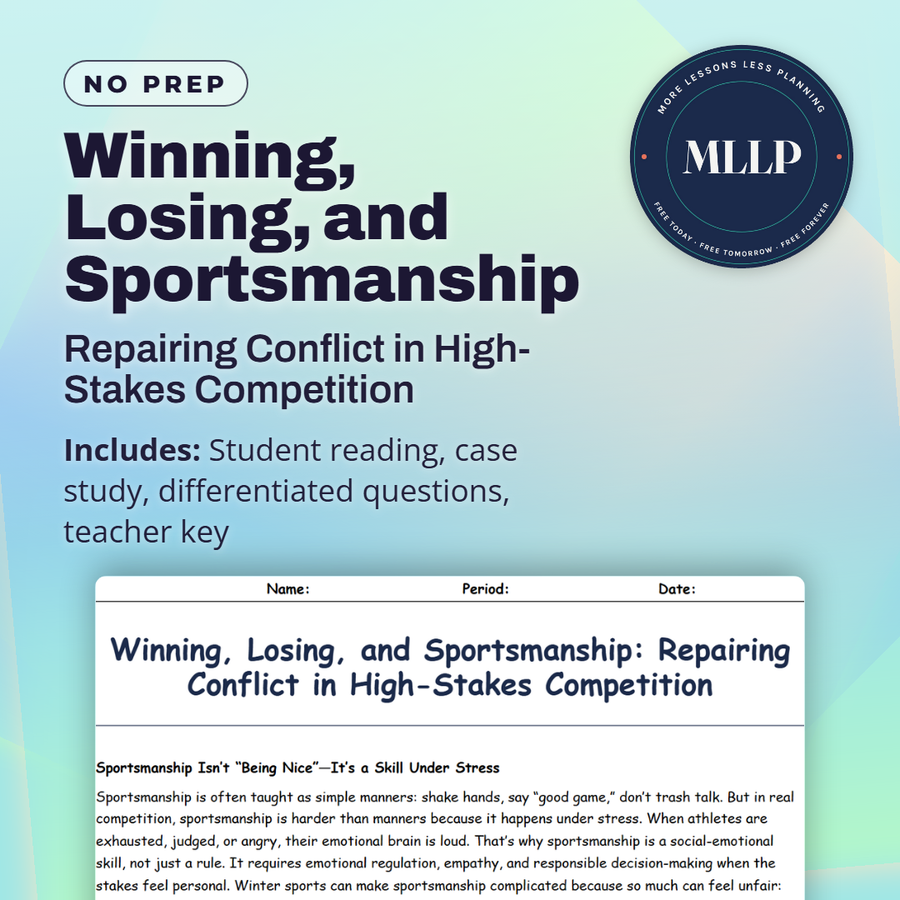
Winning, Losing, and Sportsmanship: Repairing Conflict in High-Stakes Competition
Quality reviewed September 2026
Facts verified September 9, 2026
- Subject
- Health & PE
- Grades
- Grades 9-12
- Length
- 8-page student worksheet
- Time
- About one 50-minute class period
- Great for
- Sub plans and independent work
- Includes
- Reading passage, comprehension questions + full answer key
- Format
- Print-and-go PDF
What students do
- Identify emotional regulation strategies that prevent impulse choices under stress
- Distinguish between accountability and blame when discussing performance failures
- Plan a repair conversation that includes listening and changed behavior alongside the apology
- Evaluate how social media intensifies conflict and why private resolution matters
What it covers
- Emotional regulation under high stakes
- Accountability versus blame culture
- Repair and restorative conflict resolution
Start reading this worksheet
Sportsmanship: A Skill Under Stress, Not “Being Nice”
Sportsmanship is often taught as simple manners: shake hands, say “good game,” don’t trash talk. But in real competition, sportsmanship is harder than manners because it happens under stress. When athletes are exhausted, judged, or angry, their emotional brain is loud. That’s why sportsmanship is a social-emotional skill, not just a rule. It requires emotional regulation, empathy, and responsible decision-making when the stakes feel personal. Winter sports can make sportsmanship complicated because so much can feel unfair: changing weather, judging, equipment issues, or a crash caused by another athlete’s mistake. Athletes can feel robbed even when officials followed rules. In that moment, the athlete’s identity is on the line: “If I didn’t win, what does that say about me?” That identity pressure fuels conflict. SEL focuses on separating performance from worth. You can compete fiercely and still treat people with dignity. That combination is what mature athletes learn. Sportsmanship also protects teams and communities. A single meltdown can damage reputations, create penalties, and harm mental health. On the other hand, strong sportsmanship builds trust. It makes competition safer because athletes are less likely to act recklessly out of anger. In a school setting, sportsmanship is also leadership. Younger athletes copy what older athletes do. When leaders model calm respect, the culture improves. So the goal is not “no emotions.” The goal is handling emotions so they don’t control your choices.
Emotional Regulation: What To Do Before You Say Something You Regret
The most practical sportsmanship skill is pause. When emotions spike, the brain shifts into a fight-or-flight state and impulse control decreases. That’s why athletes may say things they would never say in a calm moment. SEL strategies teach athletes to notice their cues (tight jaw, hot face, clenched fists) and use a regulation tool: controlled breathing, stepping away, or a quick phrase like “reset.” This is not weakness. It’s self-control. Athletes who regulate emotions recover faster and perform better in future events. Emotional blowups create lingering shame or drama that distracts from training. Another key skill is perspective-taking. This doesn’t mean excusing harm. It means asking, “What else could be true?” If judging feels unfair, maybe the call was consistent with rules. If an athlete caused a collision, it may have been accidental. Perspective-taking reduces rage and opens the door to problem-solving. Finally, sportsmanship includes accountability. If you mess up (trash talk, shove someone, post something cruel), repair matters. Repair means recognizing harm, apologizing, and changing behavior. In SEL, repair isn’t just saying sorry; it’s rebuilding trust through actions.
Identity and Losing: Separating Outcome From Worth
High-stakes competition can make athletes feel like results define them. That’s especially true in adolescence, when identity is still forming. A loss can feel like rejection. A mistake can feel like humiliation. When athletes connect self-worth to outcome, they’re more likely to lash out, blame others, or collapse emotionally. Healthy sportsmanship teaches a different message: your value is stable, your performance is variable. You can be proud of effort and still want to improve. You can be disappointed without becoming disrespectful. This mindset protects mental health and keeps athletes learning. It also builds resilience. Resilience isn’t pretending losing doesn’t hurt. It’s processing the hurt and moving forward with purpose. Athletes who build resilience can review mistakes without shame. They can accept feedback. They can set realistic goals. This is responsible decision-making in action. Another important SEL idea is empathy in winning. Winners have power in that moment. They can either use it to humiliate or to respect. A simple gesture (helping someone up, acknowledging effort, staying humble) can change the emotional climate of a whole team. That’s why coaches often say, “How you win matters.” It’s not a slogan. It’s culture.
Like what you read? The full reading, the case study, and every question set are in the free download below, along with the answer key.
Why this matters
Miles yells at his teammate in front of the crowd, the moment gets filmed, and by the time he reaches the locker room strangers online are already picking sides. That sequence is familiar to anyone who plays a competitive sport.
Athletes tend to measure maturity by how calm they stayed. This reading argues for something harder: what you do after you lose it. The repair steps, naming harm, apologizing without excuses, listening, changing behavior, give my team language for a conversation most of them avoid.
From one teacher to another
Miles' outburst in front of the crowd is a moment every coach knows. He panics, yells at his teammate, and now everyone's taking sides online. The reading doesn't pretend that feelings disappear; it teaches what to do when emotions spike. My athletes work through the repair steps, naming harm, apologizing without excuses, listening, changing behavior. They learn that maturity is not being calm all the time. It's what you do after you lose it.
What you get
Download
Where should I send the next one?
Everything here is free and it stays that way. Leave your email and I'll send you the new lessons as they go up. You can unsubscribe from any one of them.
Related resources
Altitude, Cold Stress, and Human Adaptation: How the Body Stays in Balance
Blueprint of Power: Muscles and Joints That Make Winter Sports Work
Doping Investigations: How Forensic Science Protects Sport Integrity

Gold Medals Need Geography: Why Some Places Can Host and Others Can’t
Luge and Skeleton: Extreme Speed, Risk Variables, and Safety Engineering
Nations, Boycotts, and Global Messages: When the Olympics Become Diplomacy
Every lesson on this site is free to download and use. If one of them saved you a prep period, you can chip in a few bucks toward my three kids' daycare fund. That's genuinely where tips go.