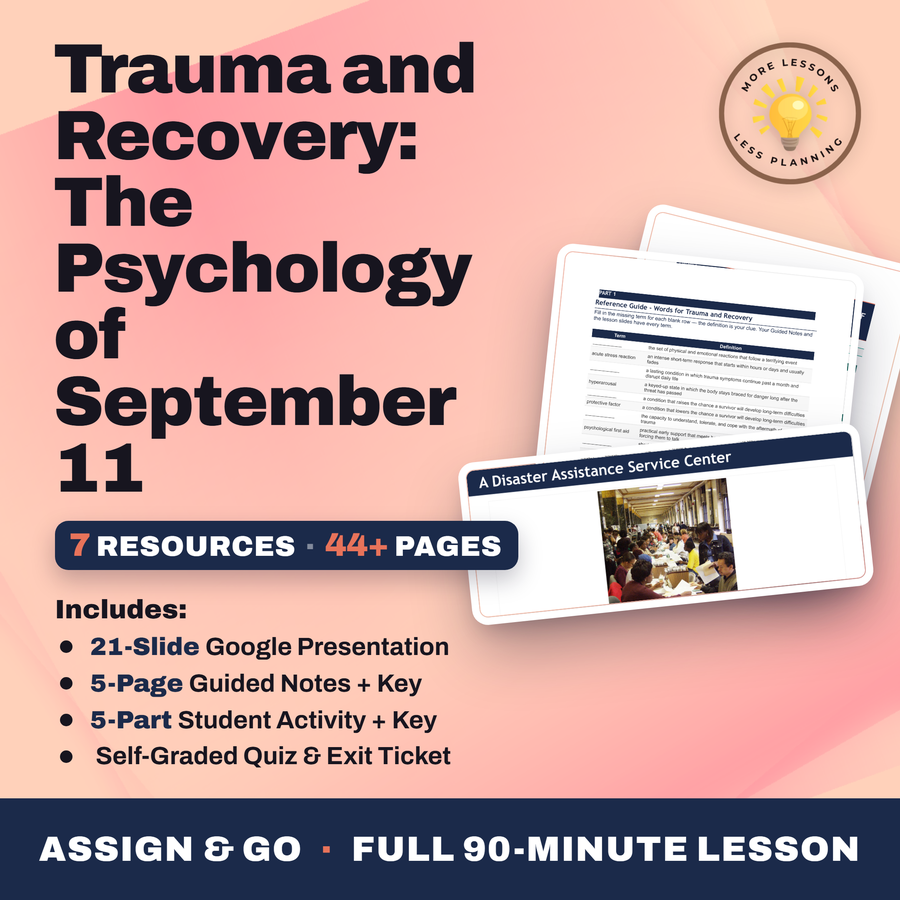
Trauma and Recovery: The Psychology of September 11
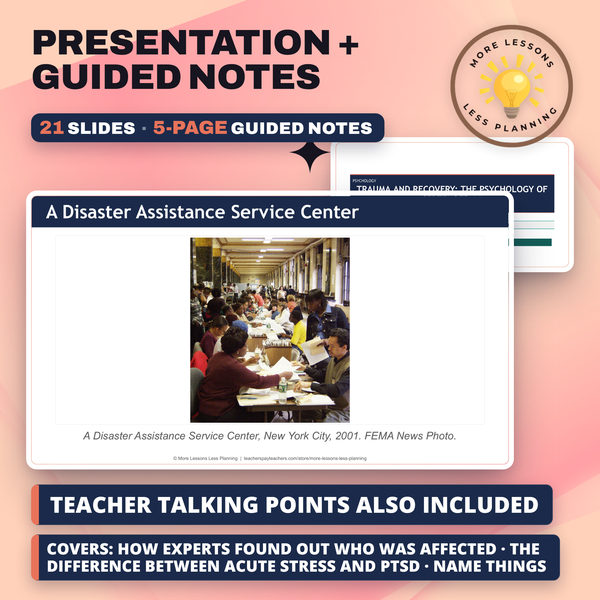
- Slide deck
- Guided notes
- Guided notes teacher key
- Activity + answer key
- Quiz + answer key
- Exit ticket + answer key
- Teacher guide
- Teacher presentation notes
Where should I send the next one?
Everything here is free and it stays that way. Leave your email and I'll send you the new lessons as they go up. You can unsubscribe from any one of them.
Every file in this toolkit
Related resources

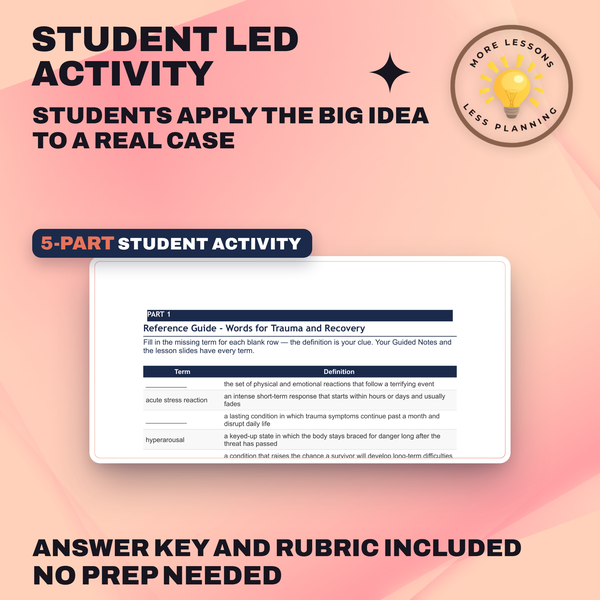
What students do
- Sort survivors into rings of exposure based on physical and personal proximity to the event
- Compare a normal acute stress reaction against a diagnosed case of post-traumatic stress disorder
- Identify risk factors and protective factors that shift the odds of lasting harm
- Analyze a SAMHSA federal training manual excerpt on the mental health response to mass violence
What it covers
- The population exposure model and rings of exposure
- What separates a normal stress reaction from post-traumatic stress disorder
- Why resilience, not lasting harm, is the typical outcome
Learning targets
- Explain how experts found out who was affected.
- Explain the difference between acute stress and PTSD.
- Name things that raise or lower the risk of lasting harm.
- Explain why most people get better after a hard event.
- Describe how the government set up mental health help.
From one teacher to another
Most people who lived through September 11 ended up with PTSD - that's the claim I want my psychology students to test rather than swallow whole. They sort survivors into rings of exposure, pin down exactly where a normal stress reaction stops and a diagnosed disorder begins, and land on what a SAMHSA training manual actually backs up: recovery, not lasting harm, is the typical outcome. There's a built-in teacher-discretion note as well, because I know some of my students carry their own history with events like this.
Every lesson on this site is free to download and use. If one of them saved you a prep period, you can chip in a few bucks toward my three kids' daycare fund. That's genuinely where tips go.