How We Know What Happened: The Evidence Record
- Grades
- Grades 9-12
- Time
- About two 50-minute class periods
- Includes
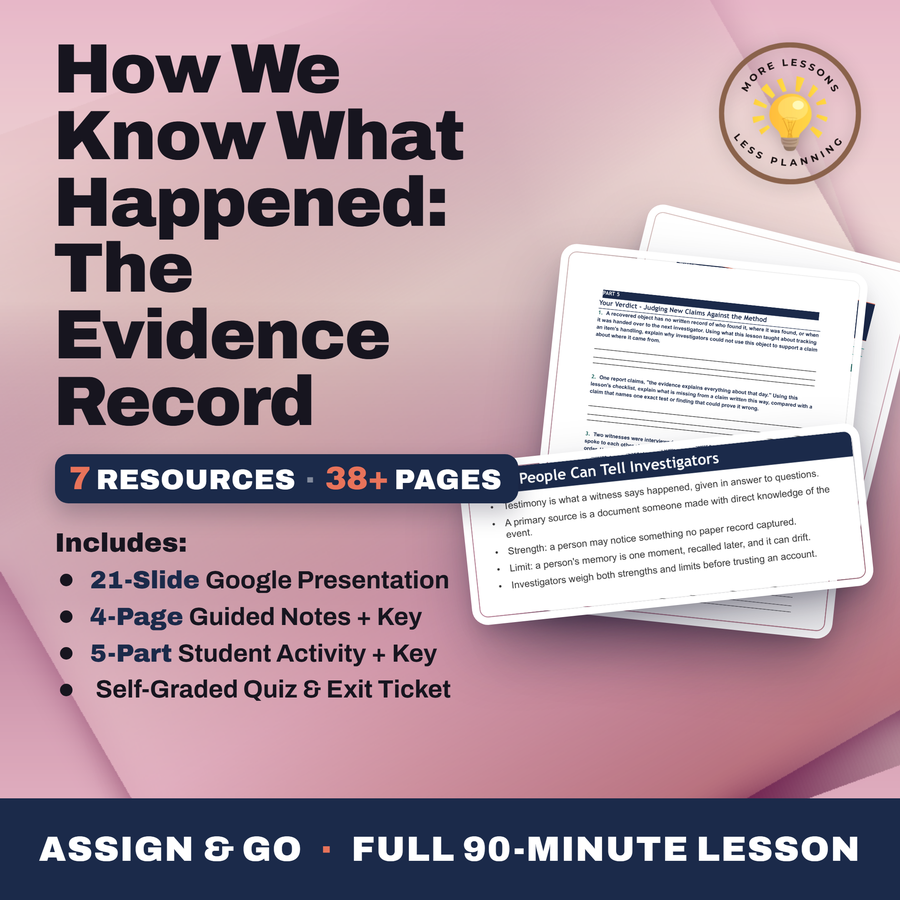
- 11 ready-to-teach files
- Format
- Word (.docx) · PowerPoint (.pptx)
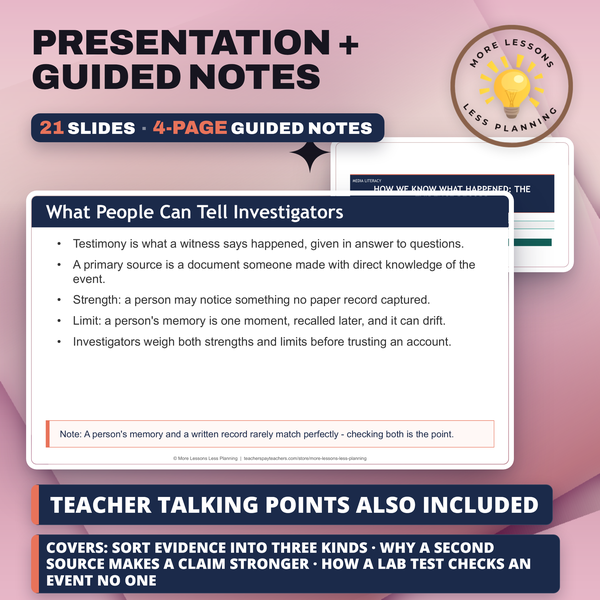
- Slide deck
- Guided notes
- Guided notes teacher key
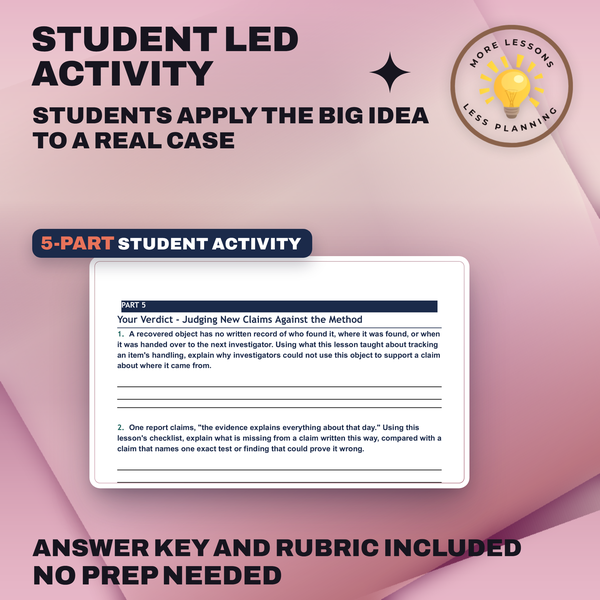
- Activity + answer key
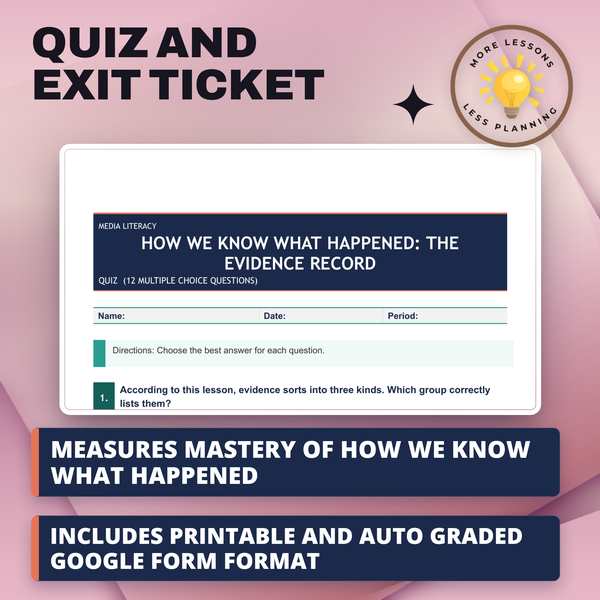
- Quiz + answer key
- Exit ticket + answer key
- Teacher guide
- Teacher presentation notes
What students do
- Sort evidence into physical, documentary, and testimonial categories
- Fix a sequence of events using photo time stamps
- Compare two federal investigations that asked different questions of the same day
- Analyze the 9/11 Commission Report's own preface describing its working method
What it covers
- How investigators establish what happened when an event cannot be rerun
- Provenance, chain of custody, and corroboration between independent sources
- Why a credible report states its own limitations
Learning targets
- Sort evidence into three kinds: things, records, and words.
- Explain why a second source makes a claim stronger.
- Describe how a lab test checks an event no one can repeat.
- Put events in order using time stamps on photos.
- Explain why a good report says what it left out.
Peek inside
A Scientist
Can rerun a test to check a result.
Repeats a trial until a pattern holds.
Controls conditions to isolate one cause.
An Investigator
Repeats a until a pattern holds.
September 11, happened once, and only once.
1. A visitor log says a maintenance worker used a side door early in the morning. The building's own swipe-card system also shows that same worker opening that same door at the same time. Two separate records lining up like this is called .
Why this matters
A government report that states, on its own pages, what it could not verify is rarer than students assume. This lesson builds around that: the 9/11 Commission's own account of its method, read straight instead of summarized, next to the photo time stamps and testimony that let investigators fix a sequence they couldn't rerun.
September 11 is usually the first major event my students already hold an opinion about before studying a single primary source. Sorting evidence into physical, documentary, and testimonial categories gives them a way to check a claim that has nothing to do with this particular morning, which is really the point.
From one teacher to another
September 11 is usually the first major event my students already have an opinion about before they've studied it, which makes it the best case I know for teaching evidence instead of conclusions. They sort what survives into physical, documentary, and testimonial evidence, use photo time stamps to fix a sequence, and read the Commission's own account of what it didn't do. They leave with a checklist for evaluating a claim that has nothing to do with September 11 specifically, which is really the point.
Every file in this toolkit
Download
Where should I send the next one?
Everything here is free and it stays that way. Leave your email and I'll send you the new lessons as they go up. You can unsubscribe from any one of them.
Related resources
Security and Liberty After September 11
September 11: The Day and the Response
The Economic Shock of September 11
Trauma and Recovery: The Psychology of September 11
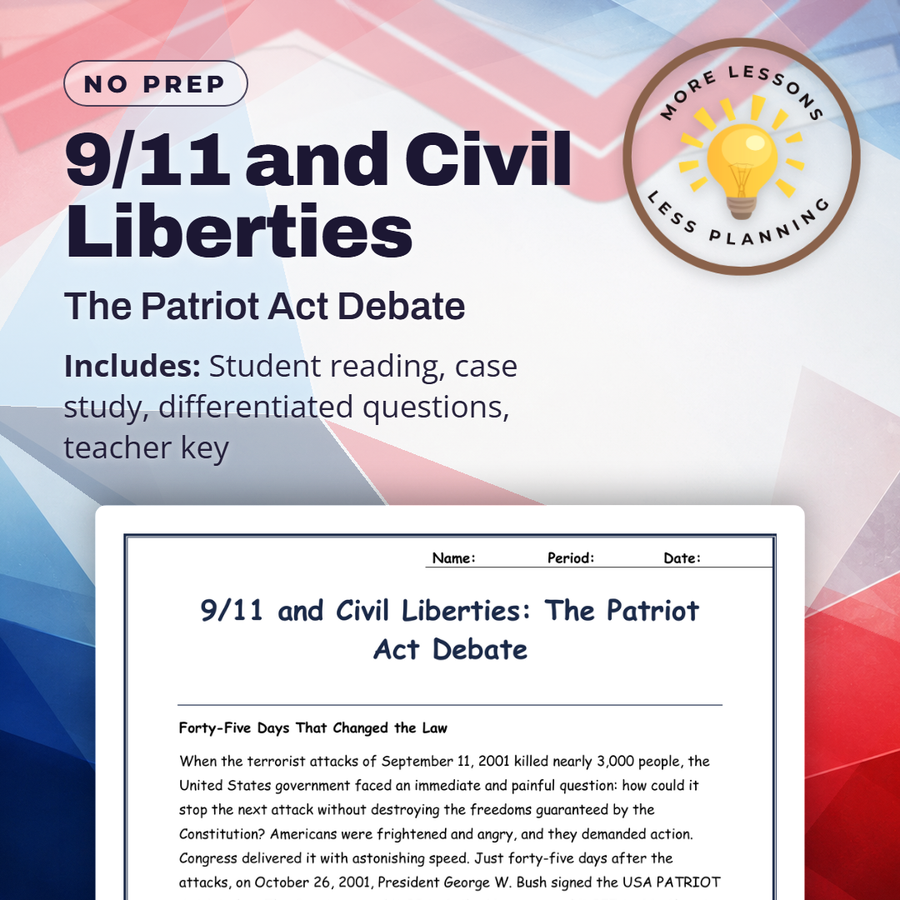
9/11 and Civil Liberties: The Patriot Act Debate
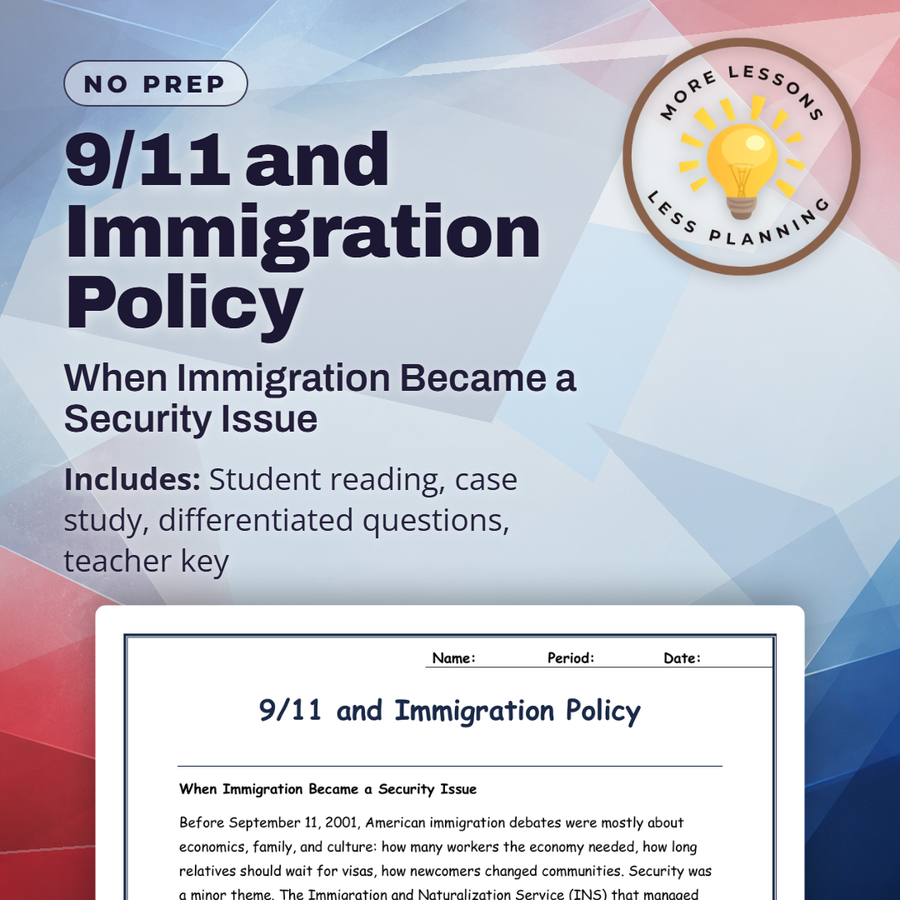
9/11 and Immigration Policy
Every lesson on this site is free to download and use. If one of them saved you a prep period, you can chip in a few bucks toward my three kids' daycare fund. That's genuinely where tips go.