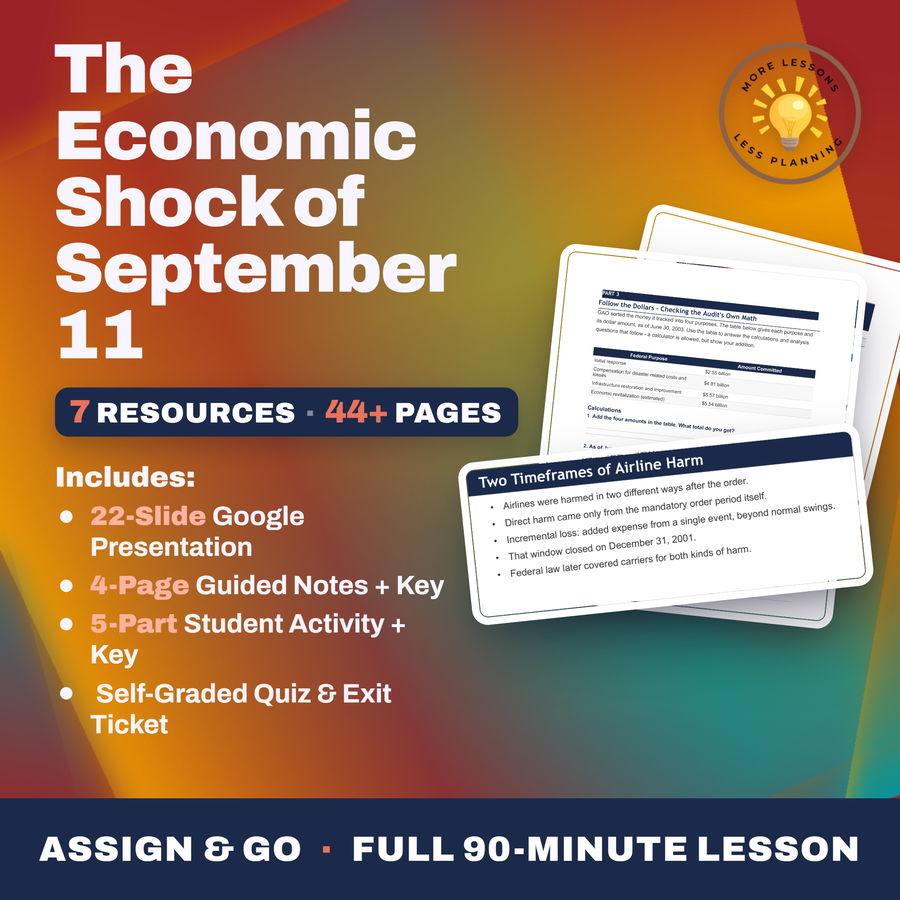
The Economic Shock of September 11
- Grades
- Grades 9-12
- Time
- About two 50-minute class periods
- Includes
- 11 ready-to-teach files
- Format
- Word (.docx) · PowerPoint (.pptx)
- Slide deck
- Guided notes
- Guided notes teacher key
- Activity + answer key
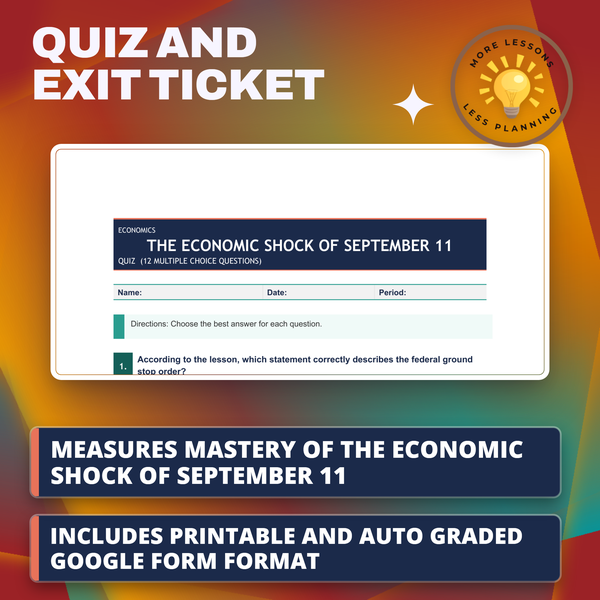
- Quiz + answer key
- Exit ticket + answer key
- Teacher guide
- Teacher presentation notes
What students do
- Trace federal disaster aid from the Stafford Act declaration through the four channels that carried it
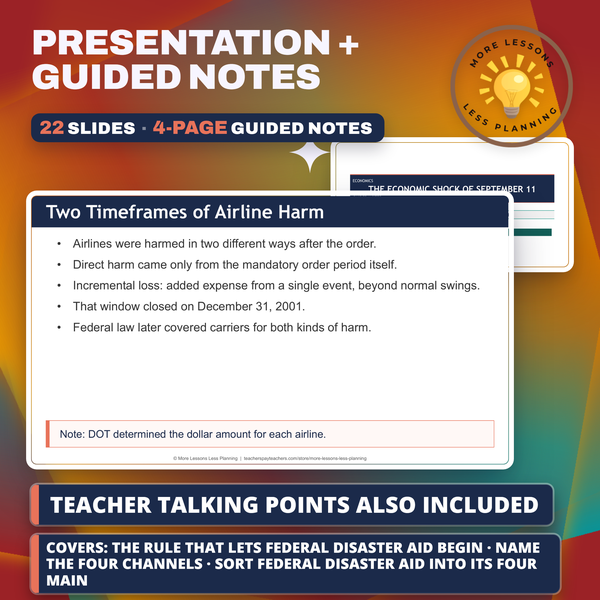
- Explain how the airline cap rule tied compensation to capacity share rather than stated losses
- Compare committed funds against funds actually disbursed
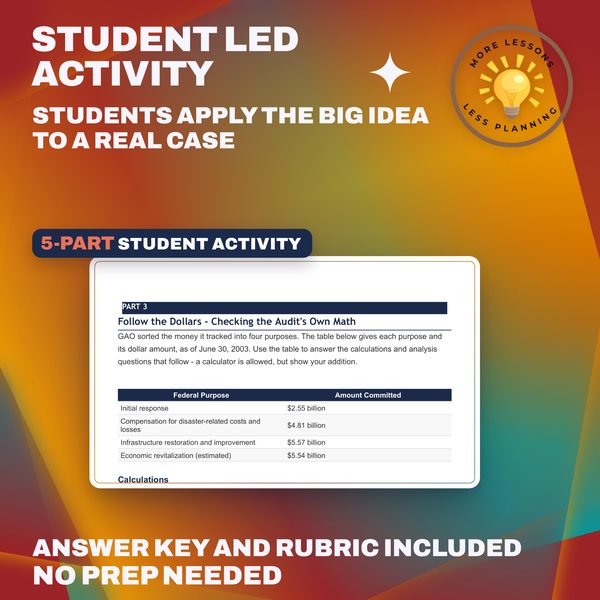
- Verify the reported aid totals using the GAO's own audit figures
What it covers
- The Stafford Act declaration that starts federal disaster funding
- The four channels and four purposes of federal aid after September 11
- Why committed money isn't the same as money that reached someone
Learning targets
- Explain the rule that lets federal disaster aid begin.
- Name the four channels that carried most federal aid.
- Sort federal disaster aid into its four main purposes.
- Explain how a cap rule limited airline payments.
- Check whether the reported aid totals add up.
Peek inside
What Stopped
Aircraft nationwide were grounded within hours.
The NYSE closed for six days; a business district halted.
A profound loss of life reshaped the city and country.
Two Questions to Answer
closed for six days; a business district halted.
How much moved? $20 billion in federal aid.
1. A tornado destroys half of a small town's water system. Repairs will cost more than the town's yearly budget. Town leaders ask Washington for disaster funds under a specific federal law. Name that law: the .
Why this matters
Every major disaster declaration since September 11 opens the same legal door: a Stafford Act declaration, the same one that started federal aid moving after the attacks. My economics students trace how that door works, not because the mechanism is dramatic, but because most people assume aid announced is aid delivered, and this lesson forces them to check.
They follow money across four separate channels and then hold the final total against what a federal audit actually confirmed got spent, rather than what was promised. Understanding that gap, between committed and disbursed, matters well beyond this one event; it is how every relief program since has been evaluated.
From one teacher to another
A dollar that Congress designates for disaster relief and a dollar that actually lands in someone's account aren't the same dollar, and my economics students spend this whole lesson learning to tell them apart. They map how a Stafford Act declaration opens the spigot, follow the money across four separate channels, and then hold the final total up against what the GAO's audit actually confirmed got spent. I keep policy opinions out of it entirely; the point is reading the mechanism, not arguing about it.
Every file in this toolkit
Download
Where should I send the next one?
Everything here is free and it stays that way. Leave your email and I'll send you the new lessons as they go up. You can unsubscribe from any one of them.
Related resources
How We Know What Happened: The Evidence Record
Security and Liberty After September 11
September 11: The Day and the Response
Trauma and Recovery: The Psychology of September 11

9/11 and Civil Liberties: The Patriot Act Debate
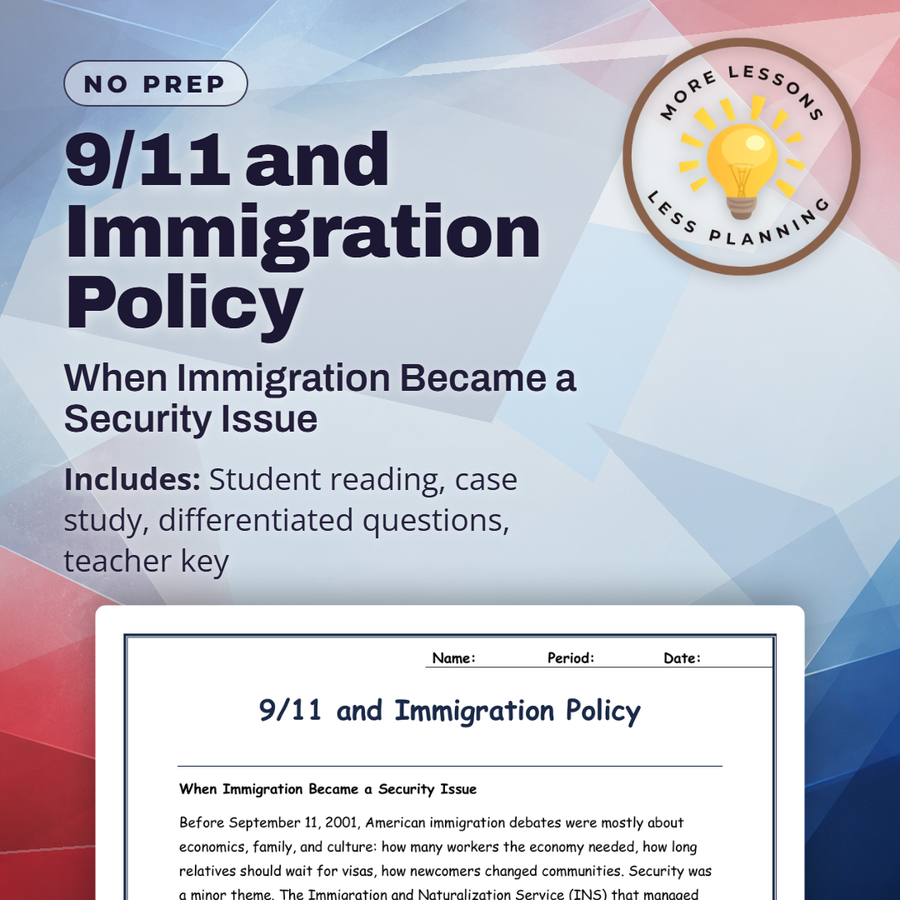
9/11 and Immigration Policy
Every lesson on this site is free to download and use. If one of them saved you a prep period, you can chip in a few bucks toward my three kids' daycare fund. That's genuinely where tips go.