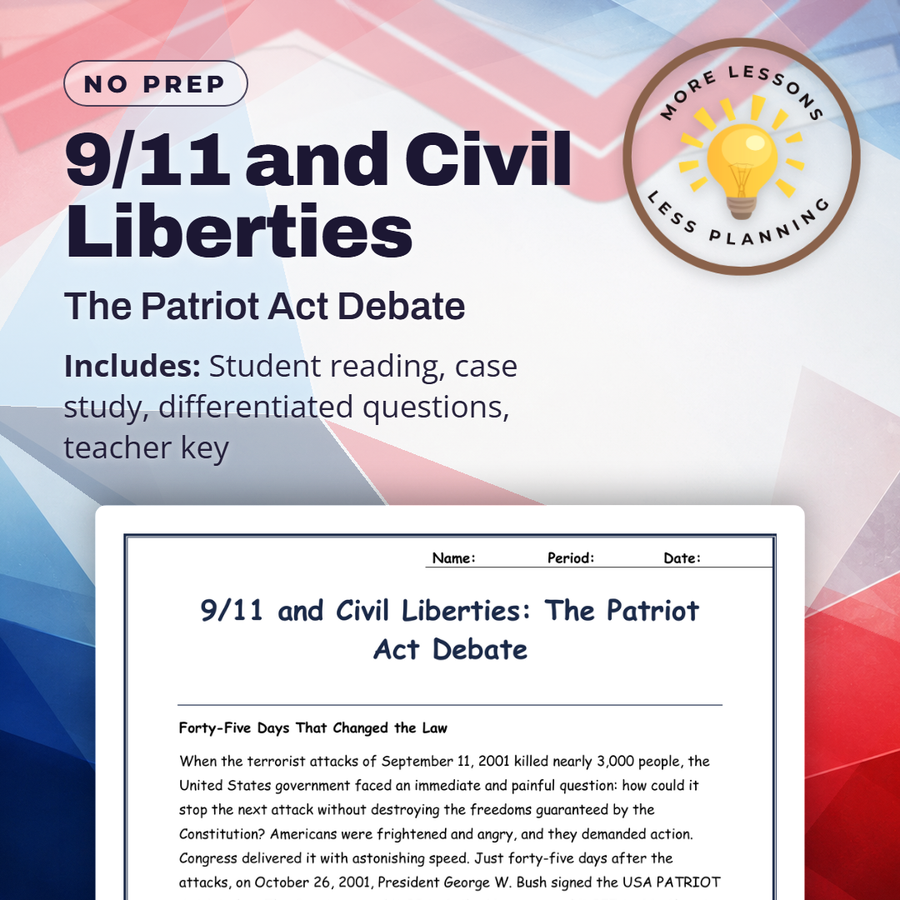
9/11 and Civil Liberties: The Patriot Act Debate
Quality reviewed September 2026
Facts verified September 7, 2026
- Subject
- Social Studies
- Grades
- Grades 9-12
- Length
- 9-page student worksheet
- Time
- About one 50-minute class period
- Great for
- Sub plans and independent work
- Includes
- Reading passage, comprehension questions + full answer key
- Format
- Print-and-go PDF
What students do
- Explain why Congress passed the Patriot Act in 45 days with only one Senate vote against it, despite the bill being over 340 pages
- Describe what Section 215, sneak-and-peek warrants, FISA courts, and National Security Letters each allowed the government to do
- Trace how Edward Snowden's 2013 revelations of bulk phone data collection exposed what the Act had enabled in secret
- Evaluate the argument between supporters (no attacks on 9/11 scale since) and critics (secret power destroys accountability)
What it covers
- Fear produces speed: the atmosphere of anthrax letters, Congressional terror, and how wartime pressure eroded normal legislative caution
- The fourth amendment battle: civil libertarians, librarians, and courts fighting to stop bulk surveillance and secret searching
- Unfinished business: how 9/11's surveillance framework still shapes debates over encryption, facial recognition, and police data-gathering
Why this matters
Russ Feingold cast the only Senate vote against the Patriot Act, six weeks after the attacks, and his question is the one this worksheet makes students sit with: how do you keep a country safe without giving away the freedoms you are trying to protect.
Section 215, sneak-and-peek warrants, National Security Letters: students learn what each power actually authorized before they learn what anyone thinks about it. The Snowden revelations then show what had been happening with those powers in secret, which turns an abstract civics debate into a question about a phone almost certainly in the room right now.
From one teacher to another
This worksheet separates what actually happened, the specific powers the government claimed and used, from the argument about whether it was worth it. That's crucial because students often think 'Patriot Act' means one simple thing, when it actually changed dozens of laws at once. I want them to grapple with Senator Russ Feingold's question: how do you keep the country safe without destroying the freedoms you're trying to protect? That's a real tension, not a rhetorical one.
What you get
Download
Where should I send the next one?
Everything here is free and it stays that way. Leave your email and I'll send you the new lessons as they go up. You can unsubscribe from any one of them.
Related resources
Every lesson on this site is free to download and use. If one of them saved you a prep period, you can chip in a few bucks toward my three kids' daycare fund. That's genuinely where tips go.