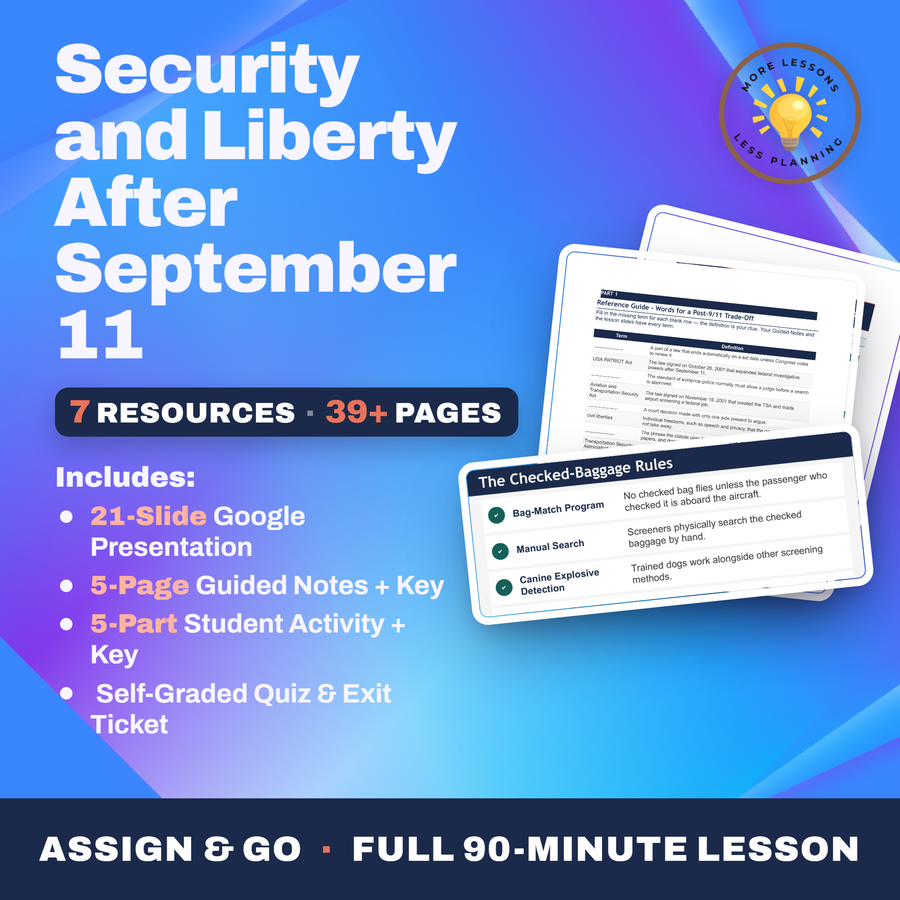
Security and Liberty After September 11
- Grades
- Grades 9-12
- Time
- About two 50-minute class periods
- Includes
- 11 ready-to-teach files
- Format
- Word (.docx) · PowerPoint (.pptx)
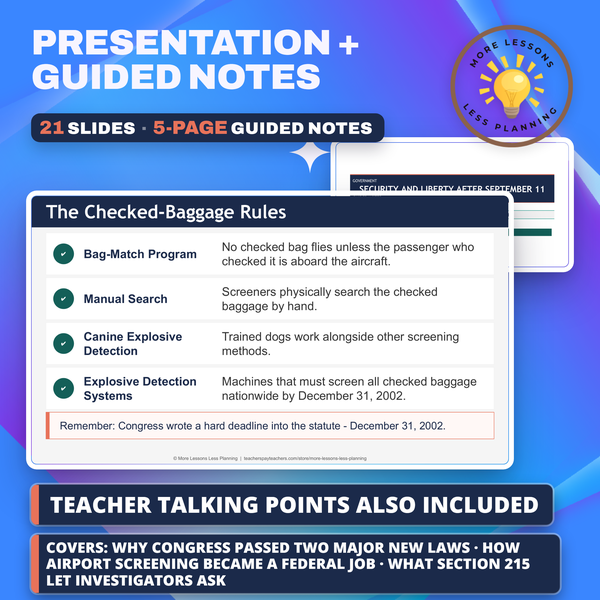
- Slide deck
- Guided notes
- Guided notes teacher key
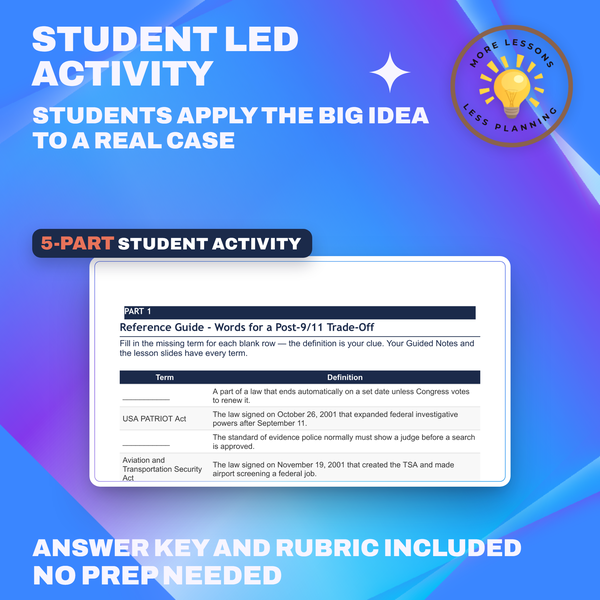
- Activity + answer key
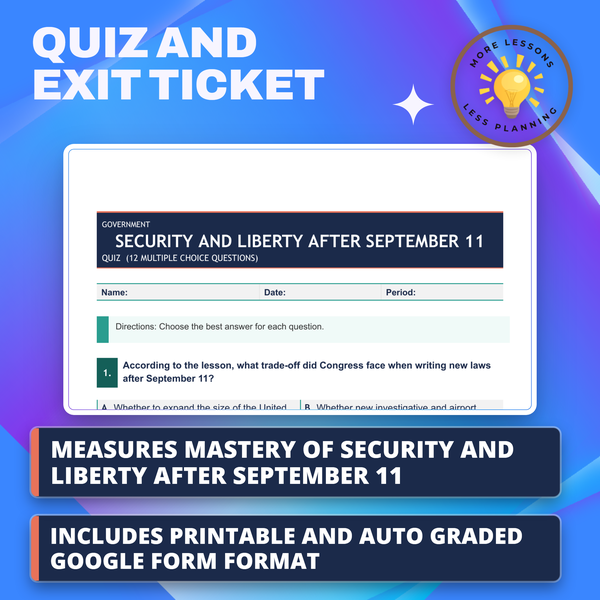
- Quiz + answer key
- Exit ticket + answer key
- Teacher guide
- Teacher presentation notes
What students do
- Read Section 215's actual statutory text to determine what counts as a "tangible thing"
- Compare a Section 215 order to an ordinary criminal search warrant
- Debate the case for and against the law using the October 25, 2001 Senate floor exchange
What it covers
- The two laws Congress passed within ten weeks of September 11, one for airport screening and one for surveillance
- What Section 215 let investigators ask a court to collect, and the First Amendment limit Congress wrote into it
- The sunset provision Congress built into the law
Learning targets
- Explain why Congress passed two major new laws in late 2001.
- Describe how airport screening became a federal job.
- Explain what Section 215 let investigators ask a court to collect.
- Name the First Amendment limit Congress wrote into the law.
- Compare the arguments made for and against the law in 2001.
Peek inside
Terrorists hijacked four planes and attacked the United States on September 11.
Congress met within weeks to decide new powers for investigators and airports.
Every new power came with a possible cost to personal freedom.
Lawmakers weighed law-enforcement authority against personal privacy.
Two new statutes would answer that question in two very different ways.
Terrorists hijacked four planes and attacked the on September 11.
Congress met within weeks to new powers for investigators and airports.
1. A school district writes a new attendance policy into its handbook, but adds a line saying the rule stops applying after three years unless the school board takes action to keep it going. Staff refer to that built-in stopping point as the .
Why this matters
Section 215 let investigators ask a court for business records nobody could see them asking for, back when that meant library checkouts and hotel logs. The same question now runs through every app on a student's phone: what can be collected about a person without their ever finding out, and what has to go through a judge first.
This lesson keeps both sides of the 2001 Senate debate in the room, senators arguing to keep the law and to scrap it on the same afternoon, using the statute's own language instead of a summary of it. Civics works better when students read the sentence Congress actually wrote.
From one teacher to another
How much can the government collect about a person without their ever finding out, and where does the law actually draw the line? That's the live question sitting under this lesson, which I designed to stay genuinely two-sided: students go straight to Section 215's own statutory language, not a summary of it, to see how the law itself defines a "tangible thing," then work through the October 25, 2001 Senate floor exchange where senators debated keeping the law versus scrapping it, both sides in the same room that day. I stop the lesson at the sunset provision Congress wrote in, on purpose, before the later politics complicate what's still a clean civics lesson.
Every file in this toolkit
Download
Where should I send the next one?
Everything here is free and it stays that way. Leave your email and I'll send you the new lessons as they go up. You can unsubscribe from any one of them.
Related resources
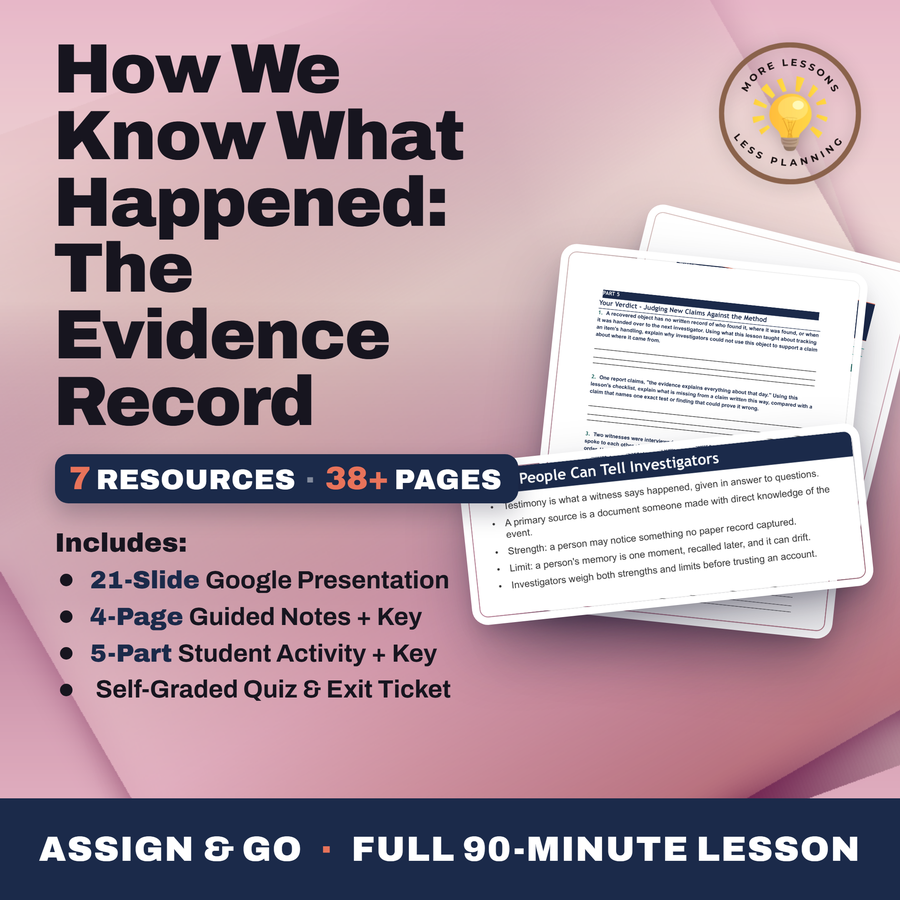
How We Know What Happened: The Evidence Record
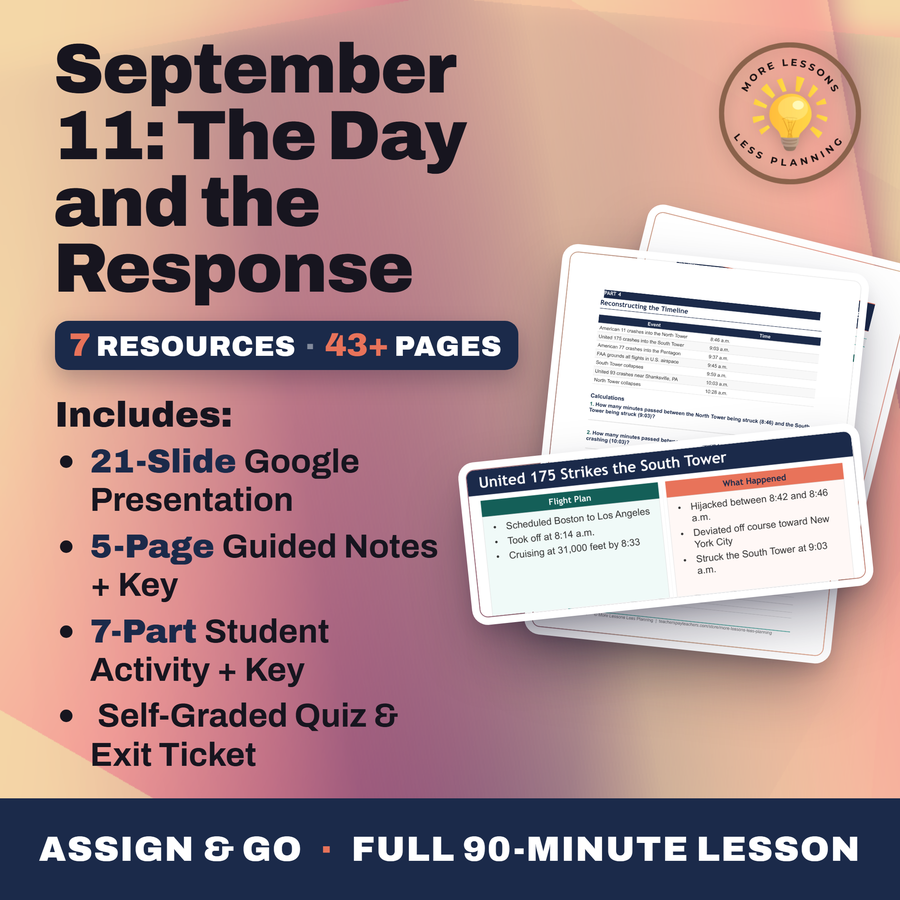
September 11: The Day and the Response
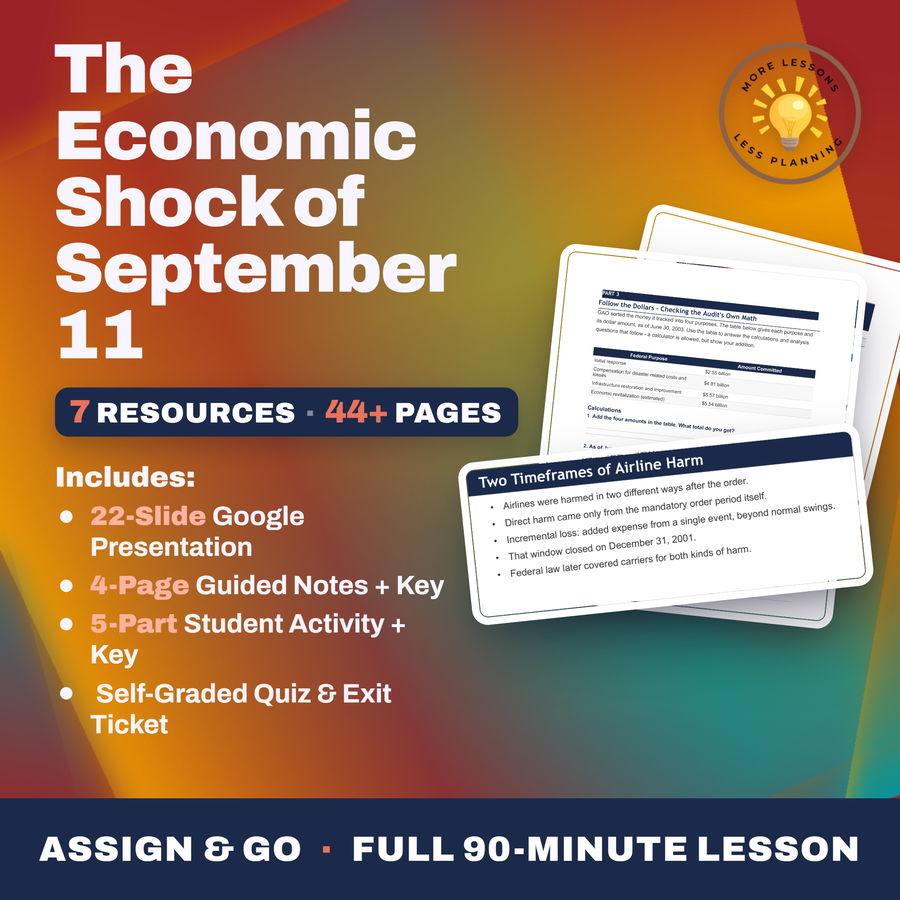
The Economic Shock of September 11
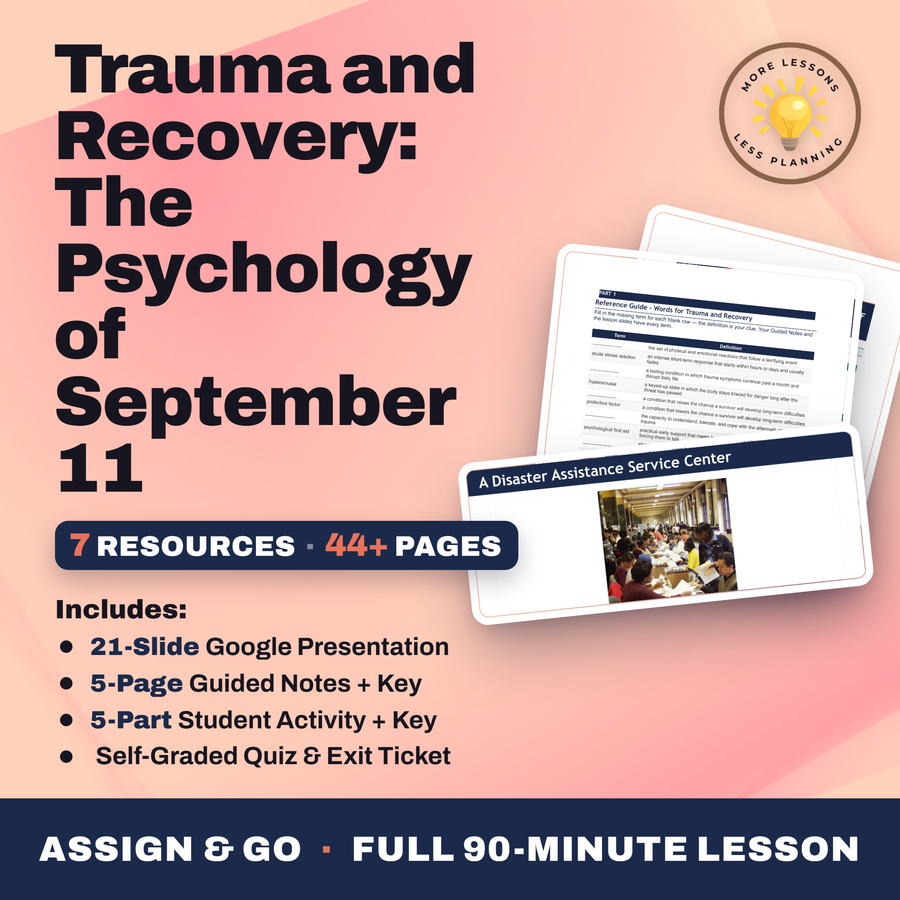
Trauma and Recovery: The Psychology of September 11
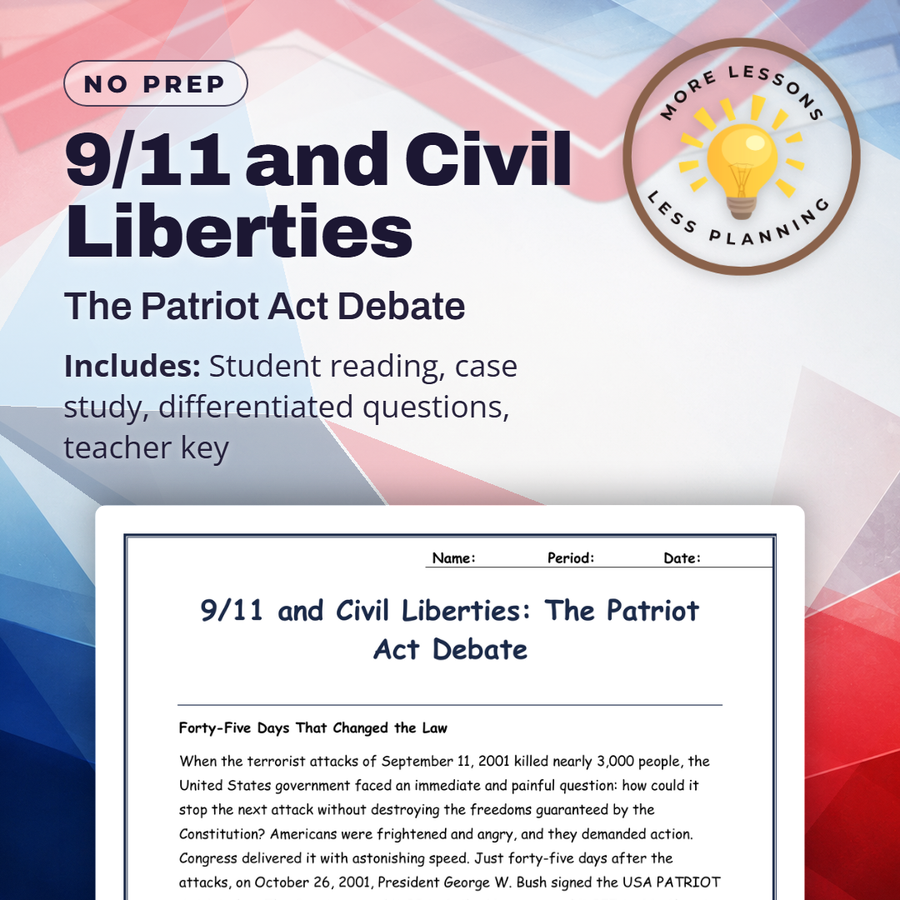
9/11 and Civil Liberties: The Patriot Act Debate
9/11 and Immigration Policy
Every lesson on this site is free to download and use. If one of them saved you a prep period, you can chip in a few bucks toward my three kids' daycare fund. That's genuinely where tips go.