
Taming Wild Animals
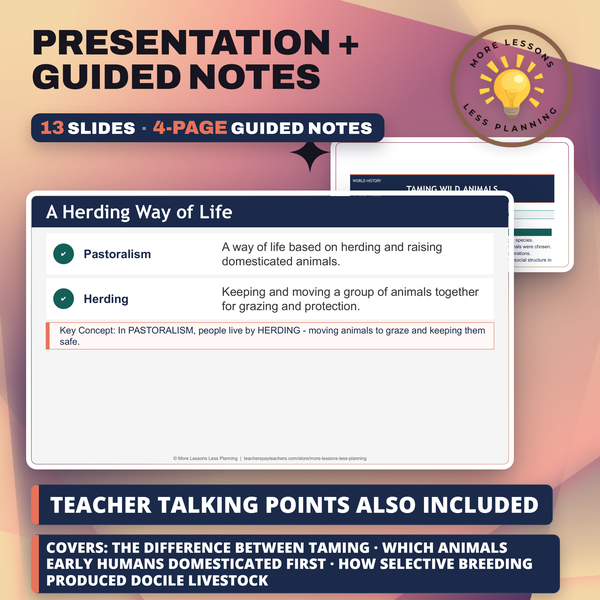
- Slide deck
- Guided notes
- Guided notes teacher key
- Activity + answer key
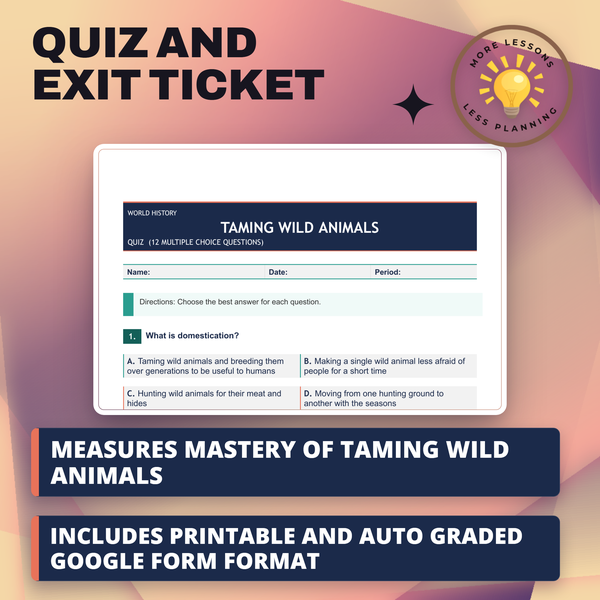
- Quiz + answer key
- Exit ticket + answer key
- Teacher guide
- Teacher presentation notes
Where should I send the next one?
Everything here is free and it stays that way. Leave your email and I'll send you the new lessons as they go up. You can unsubscribe from any one of them.
Every file in this toolkit
Related resources
Discovering Neanderthals
From Villages to Civilization

Ice Age Cave Art
Aggression and Appeasement
Alliances and the Causes of WWI

Blitzkrieg and the Fall of France
What students do
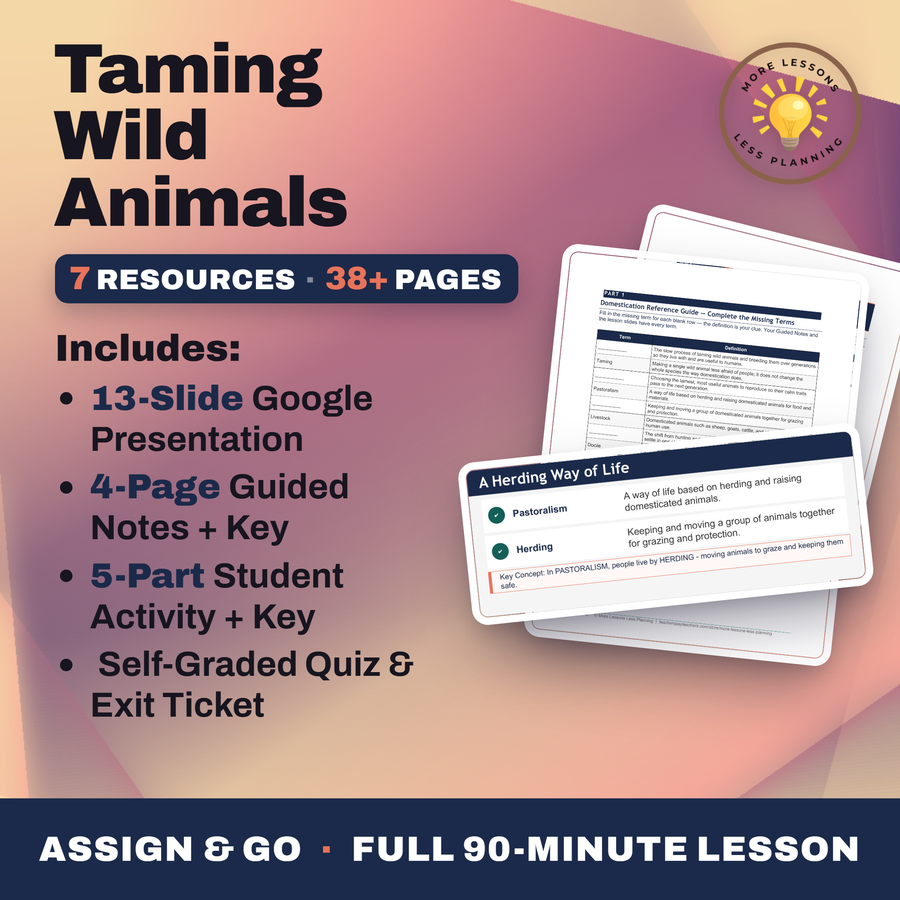
- Distinguish taming a single animal from domesticating a whole species over generations
- Explain why selective breeding for calm, docile traits produced today's livestock
- Connect herding and beasts of burden to the food surplus that reshaped Neolithic societies
- Evaluate Francis Galton's 1865 conditions for domestication against the animals people actually tamed
What it covers
- The difference between taming one animal and domesticating an entire species
- Which animals were domesticated first, and why those particular animals
- How a beast of burden like an ox changed how much land one family could farm
- How a food surplus from herding created new jobs, wealth, and social rank
Learning targets
- Explain the difference between taming a single animal and domesticating a species.
- Identify which animals early humans domesticated first and why those animals were chosen.
- Describe how selective breeding produced docile livestock over many generations.
- Explain how herding and pastoralism reshaped diet, settlement, labor, and social structure in the Neolithic Revolution.
From one teacher to another
Domestication looks like a single moment, one calm animal wandering close to a camp and simply deciding to stay, but that isn't how it worked. Students spend the lesson on the real mechanism instead, breeding only the calmest, most manageable animals across many generations until the whole species looks and behaves differently, then trace that change into beasts of burden doing the heavy work human muscle alone couldn't, and into the food surplus that freed some people to stop farming altogether. I like ending on Galton's 1865 conditions for domestication, because testing his list against real animals gives students something concrete to argue about.
Every lesson on this site is free to download and use. If one of them saved you a prep period, you can chip in a few bucks toward my three kids' daycare fund. That's genuinely where tips go.