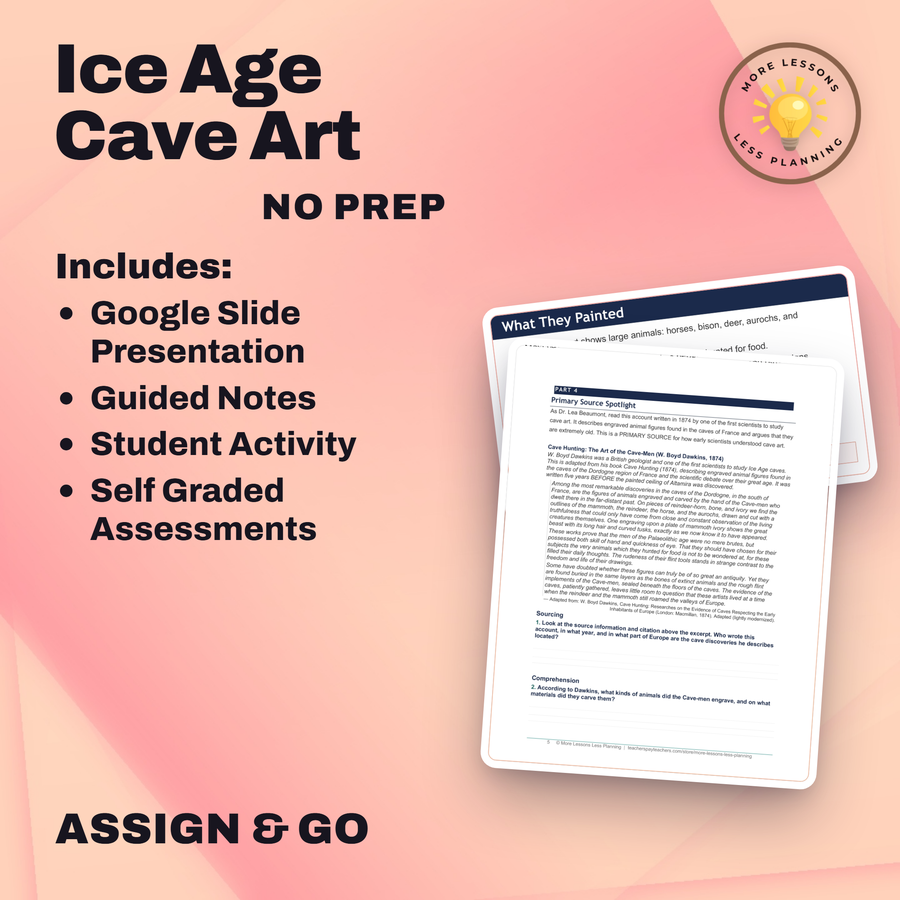
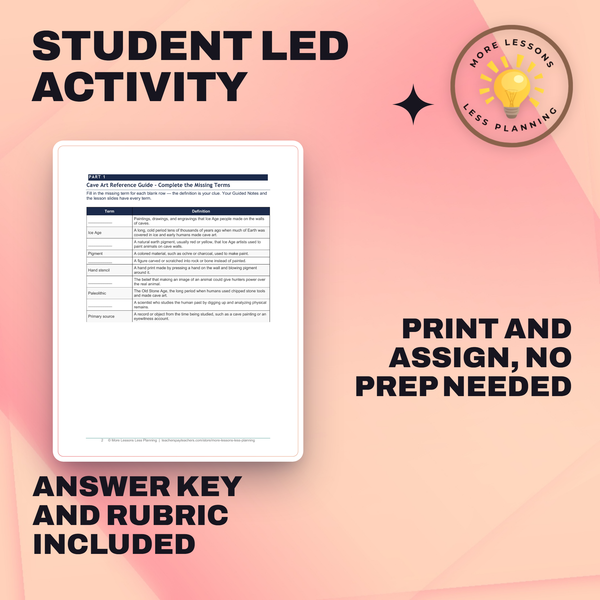
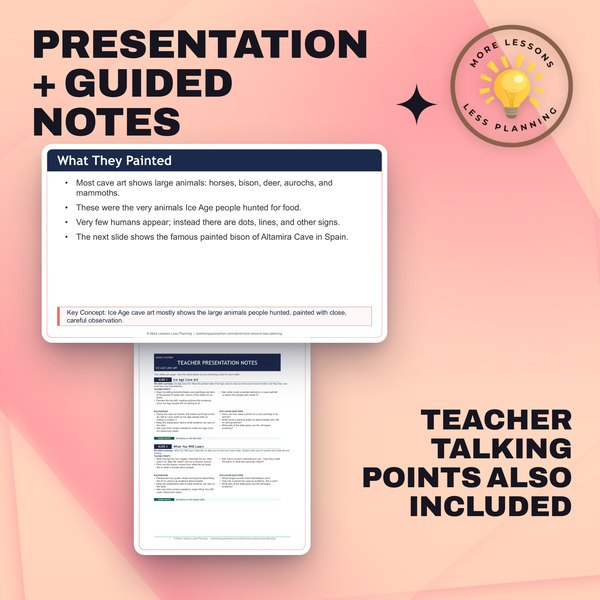

Ice Age Cave Art
- Slide deck
- Guided notes
- Guided notes teacher key
- Activity + answer key
- Quiz + answer key
- Exit ticket + answer key
- Teacher guide
- Teacher presentation notes
Where should I send the next one?
Everything here is free and it stays that way. Leave your email and I'll send you the new lessons as they go up. You can unsubscribe from any one of them.
Every file in this toolkit
Related resources
Discovering Neanderthals
From Villages to Civilization
Taming Wild Animals
Aggression and Appeasement
Alliances and the Causes of WWI

Blitzkrieg and the Fall of France
What students do
- Identify how Ice Age artists made ochre and charcoal pigments and pressed hand stencils onto cave walls
- Explain what the animals painted at sites like Altamira reveal about what Ice Age people hunted
- Weigh the theory of sympathetic magic against what the cave art record can actually support
- Read a nineteenth-century account of cave art and separate its observations from its inferences
What it covers
- How Ice Age artists made paint from ochre and charcoal, and how a hand stencil was made
- What the animals painted on cave walls, mostly horses, bison, and mammoths, reveal about daily life
- Why many painted caves sit deep and dark, and what that suggests about ritual and belief
- How archaeologists use cave art as a primary source to reconstruct a period with no writing
Learning targets
- Describe what Ice Age cave art looked like and how it was made using pigments, engraving, and hand stencils.
- Explain what cave art reveals about Ice Age daily life and the animals people hunted.
- Analyze what cave art suggests about early human belief, ritual, and symbolic thinking.
- Analyze how archaeologists use cave art as a primary source to reconstruct the distant past.
From one teacher to another
This is a short one, built for a single period, but I wanted it to do real work: students have to separate what a painted wall shows from what it might mean. They learn to make the case for sympathetic magic without treating it as settled fact, since that's the same move working historians have to make with any primary source. I like using it as a class's first primary-source lesson of the year, before they hit the harder units still to come.
Every lesson on this site is free to download and use. If one of them saved you a prep period, you can chip in a few bucks toward my three kids' daycare fund. That's genuinely where tips go.