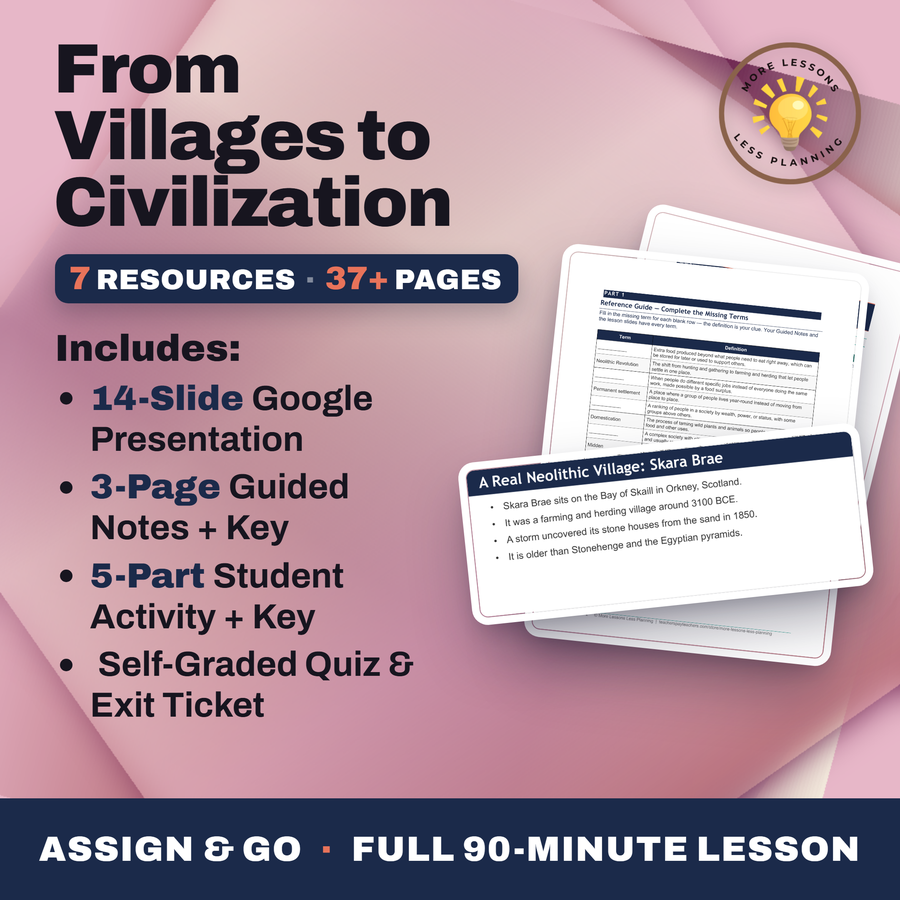
From Villages to Civilization
- Slide deck
- Guided notes
- Guided notes teacher key
- Activity + answer key
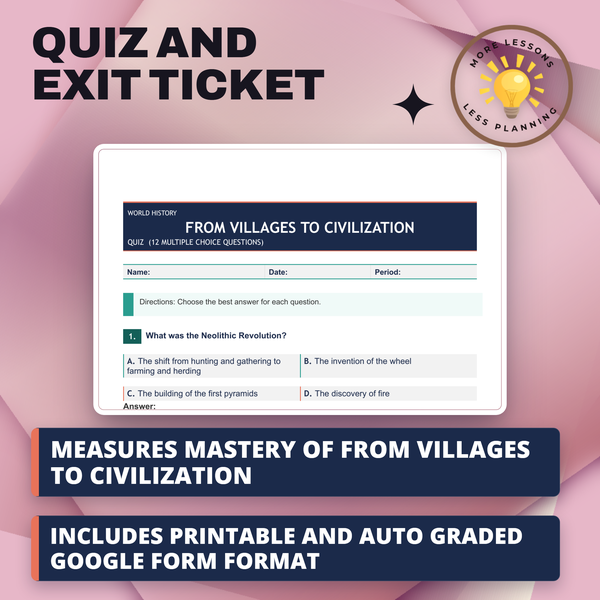
- Quiz + answer key
- Exit ticket + answer key
- Teacher guide
- Teacher presentation notes
Where should I send the next one?
Everything here is free and it stays that way. Leave your email and I'll send you the new lessons as they go up. You can unsubscribe from any one of them.
Every file in this toolkit
Related resources
Discovering Neanderthals

Ice Age Cave Art
Taming Wild Animals
Aggression and Appeasement
Alliances and the Causes of WWI

Blitzkrieg and the Fall of France
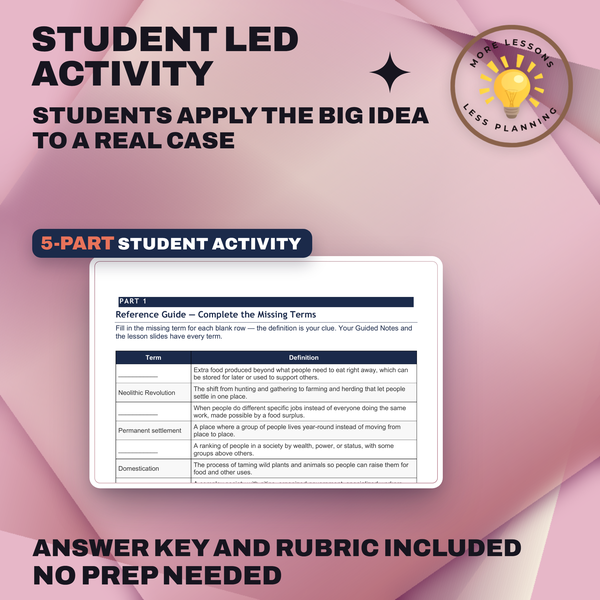
What students do
- Trace how a farming food surplus let Neolithic people stop moving and start building to last
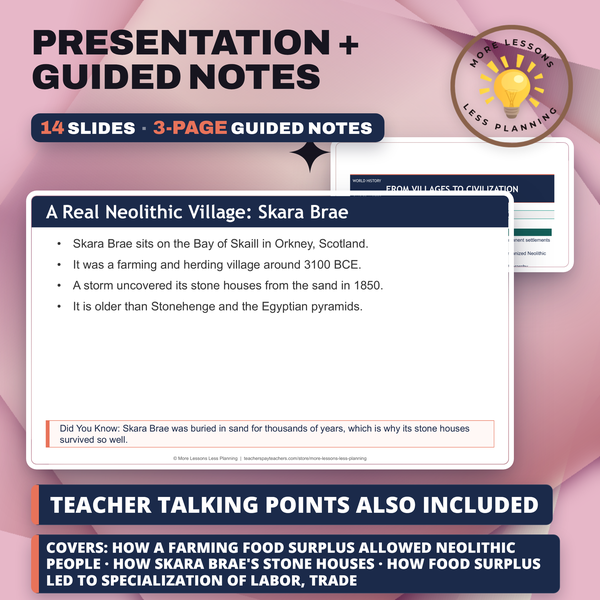
- Read the stone houses and middens of Skara Brae as evidence of a settled, organized village
- Explain how surplus produced specialization of labor, barter, and social hierarchy
- Argue how a single farming village could grow into the first cities and civilizations
What it covers
- How a food surplus allowed permanent stone settlements like Skara Brae, older than Stonehenge
- What stone furniture, built-in storage, and middens reveal about daily life in a Neolithic village
- How specialization of labor and barter created wealth gaps and social rank
- What separates a village from a civilization: cities, government, and record-keeping
Learning targets
- Explain how a farming food surplus allowed Neolithic people to build permanent settlements instead of moving with their food.
- Describe how Skara Brae's stone houses and artifacts show a settled, organized Neolithic village.
- Explain how food surplus led to specialization of labor, trade, and social hierarchy.
- Explain how permanent farming villages set the stage for the first civilizations, using both physical evidence and a written primary source.
From one teacher to another
This lesson anchors a big abstract idea, the Neolithic Revolution, in a real place: Skara Brae, a stone village on the coast of Scotland that a storm uncovered in 1850. Students work step by step from food surplus to permanent settlement to specialization to social hierarchy, and every step gets tested against something they can see in the ruins themselves, stone beds, middens, built-in storage. I like that it's older than Stonehenge and the pyramids, since that fact alone tends to get a room's attention before the harder vocabulary starts.
Every lesson on this site is free to download and use. If one of them saved you a prep period, you can chip in a few bucks toward my three kids' daycare fund. That's genuinely where tips go.