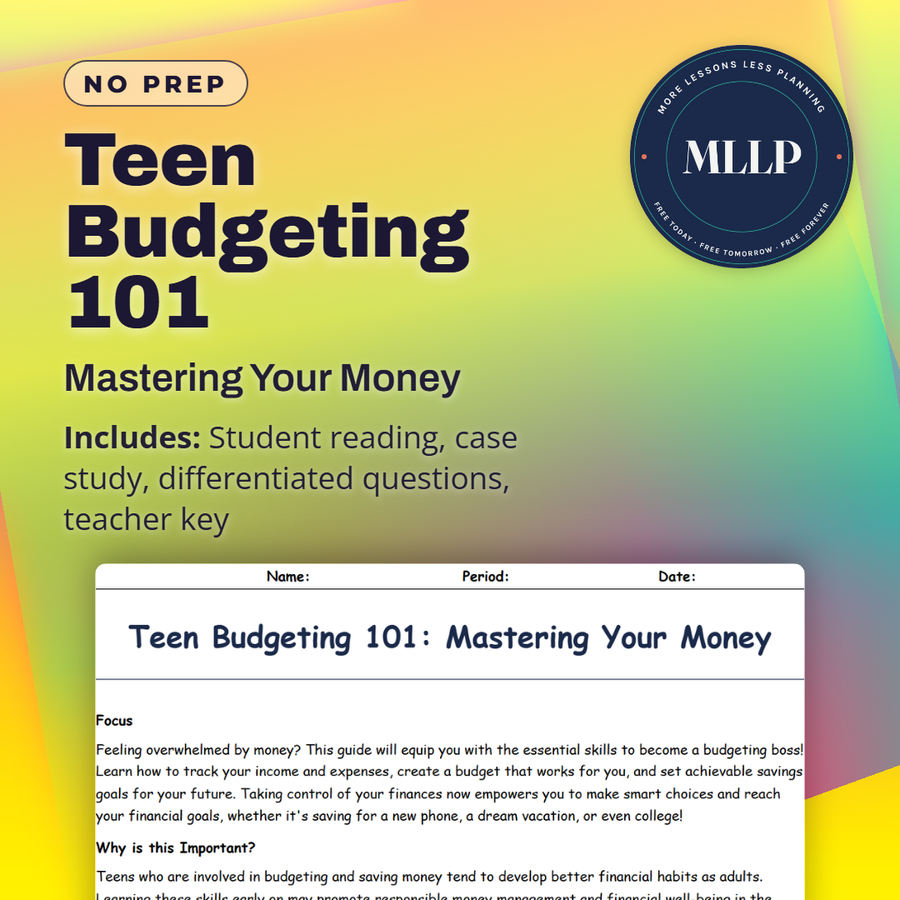
Teen Budgeting 101: Mastering Your Money
Quality reviewed September 2026
Facts verified September 16, 2026
- Subject
- Career & Life Skills
- Grades
- Grades 9-12
- Length
- 7-page student worksheet
- Time
- About one 50-minute class period
- Great for
- Sub plans and independent work
- Includes
- Reading passage, comprehension questions + full answer key
- Format
- Print-and-go PDF
What students do
- Match income, expenses, needs, wants, and savings goals to their definitions
- Fill in the blanks on the two spending categories, covering your needs first, and saying no to impulse purchases
- Answer multiple choice questions on the first step to managing money, what a budget should prioritize, and why to review it
- Write short answers on needs versus wants, two ways to avoid impulse purchases, and two recommendations for Sarah
What it covers
- Tracking every dollar of income and spending, no matter how small
- Building a budget around needs, wants, and short-term and long-term savings goals
- A case study on Sarah, whose $20 weekly allowance disappears before the week is over
Start reading this worksheet
Focus
Feeling overwhelmed by money? This guide will equip you with the essential skills to become a budgeting boss! Learn how to track your income and expenses, create a budget that works for you, and set achievable savings goals for your future. Taking control of your finances now helps you make smart choices and reach your financial goals, whether it's saving for a new phone, a dream vacation, or even college!
Why is this Important?
Teens who are involved in budgeting and saving money tend to develop better financial habits as adults. Learning these skills early on may promote responsible money management and financial well-being in the future.
Know Where Your Money Goes: Tracking Income & Expenses
The first step to mastering your money is understanding where it comes from and where it goes. Track Your Income: This includes any money you receive, such as allowance, part-time job earnings, or birthday gifts. Note down the amount and source of your income for a specific period (e.g., a week or a month). Expense Explorers: Now for the not-so-fun part: tracking your spending! Keep a record of everything you spend your money on, no matter how small the amount. This could involve writing it down in a notebook, using a budgeting app, or keeping receipts.
Like what you read? The full reading, the case study, and every question set are in the free download below, along with the answer key.
Why this matters
Allowance, birthday money, and a first part-time job are where money habits start, well before rent or a car payment. The reading notes that teens who budget and save tend to carry better financial habits into adulthood, and a student who already tracks spending and knows a need from a want has a system in place when the amounts get bigger. The cooling-off rule, waiting a day or two before buying something non-essential, is one they can try on the very next thing they want.
From one teacher to another
Sarah gets a $20 allowance every week and can't figure out where it goes, which is the problem this reading sets out to solve. It starts with tracking, writing down every dollar that comes in and goes out no matter how small, then sorts spending into needs and wants before building a plan that sets money aside for short-term and long-term goals. The section on sticking to a budget gets specific, with a small buffer for unexpected costs, a day or two of waiting before a non-essential purchase, and regular check-ins. When students are ready to budget a full paycheck, Building Your First Budget has them build a zero-based budget from a $2,600 monthly take-home check.
What you get
Download
Where should I send the next one?
Everything here is free and it stays that way. Leave your email and I'll send you the new lessons as they go up. You can unsubscribe from any one of them.
Related resources
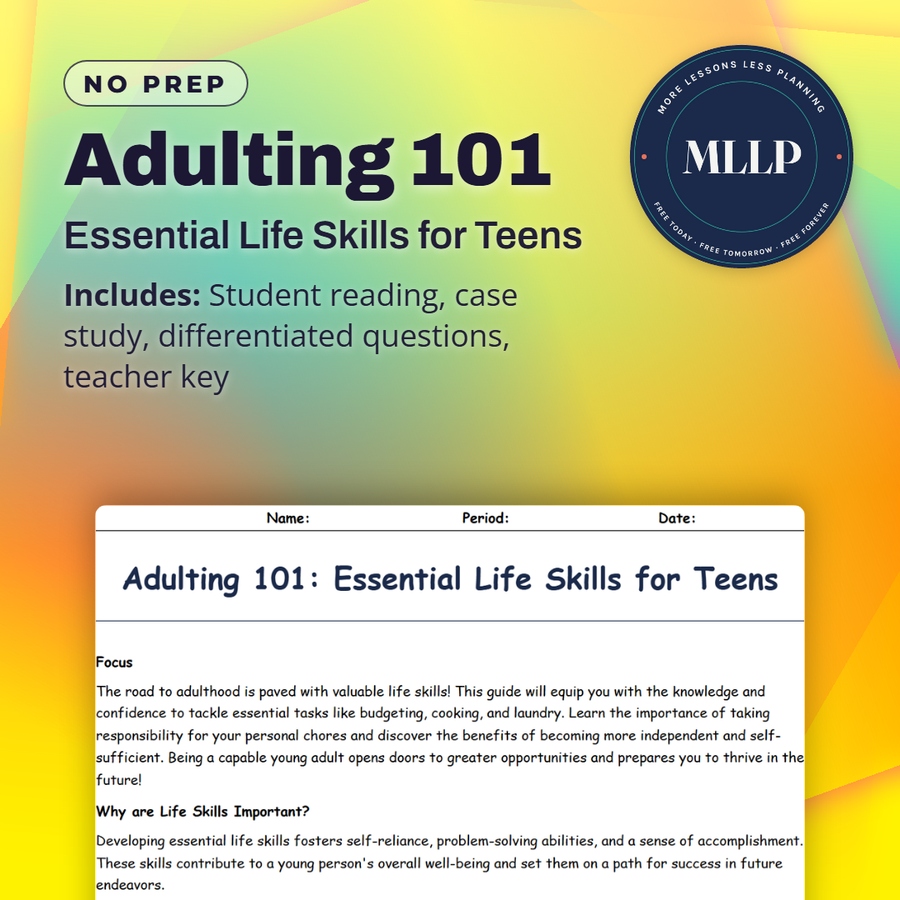
Adulting 101: Essential Life Skills for Teens
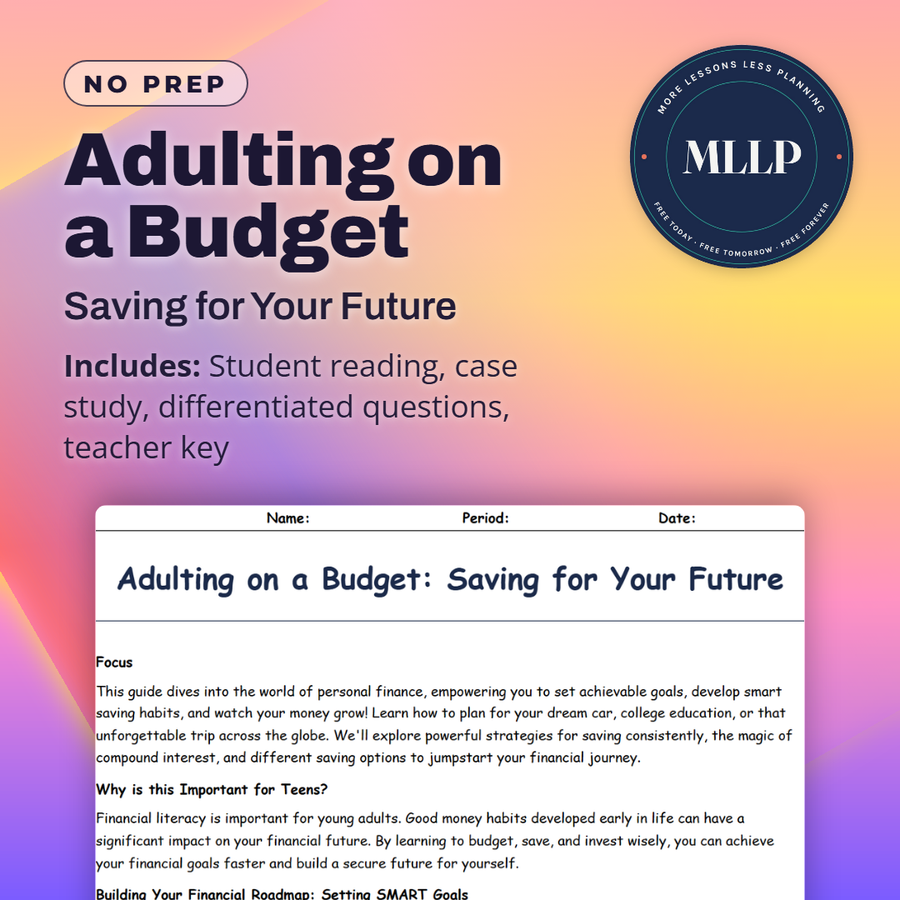
Adulting on a Budget: Saving for Your Future
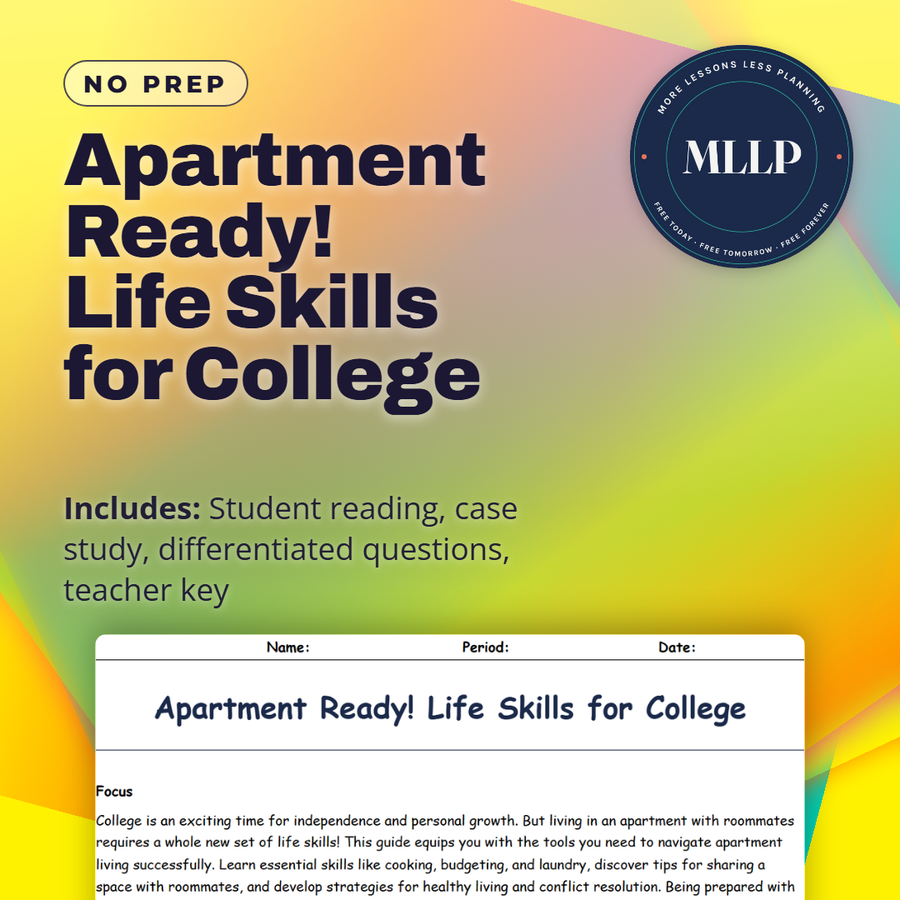
Apartment Ready! Life Skills for College
Conquer Cooking! Easy Meals for Busy Teens
DIY SOS: Quick Fixes for Everyday Problems
Grocery Shopping Like a Boss: Teen Edition
Every lesson on this site is free to download and use. If one of them saved you a prep period, you can chip in a few bucks toward my three kids' daycare fund. That's genuinely where tips go.