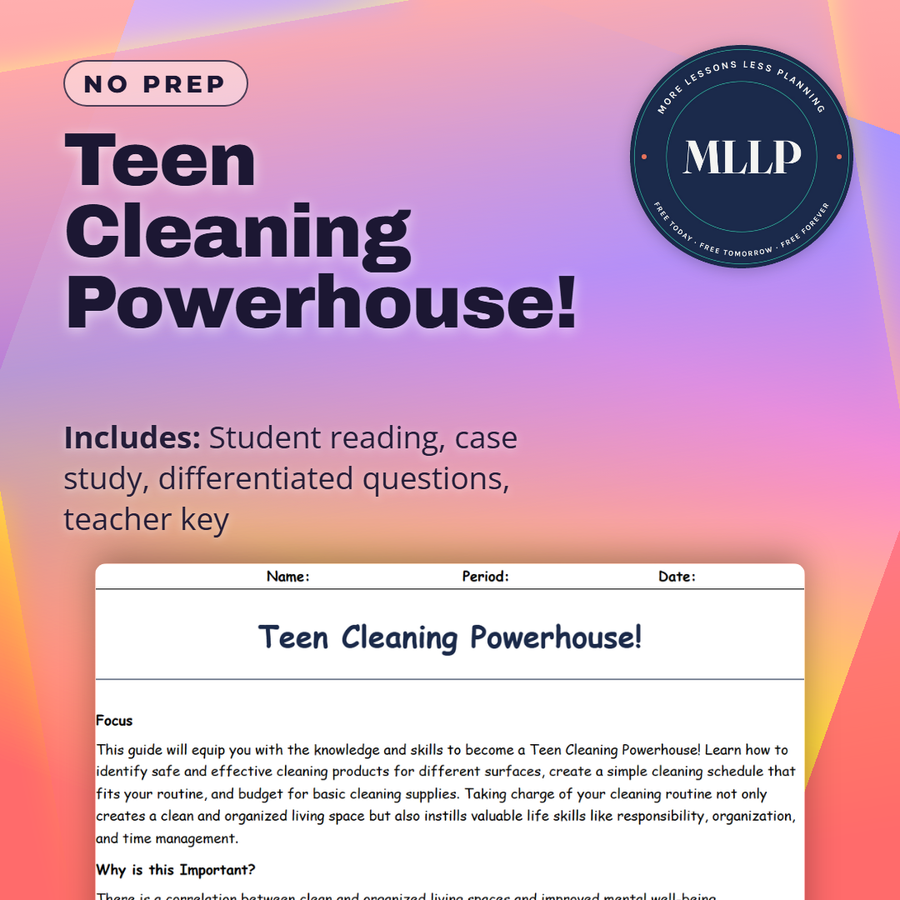
Teen Cleaning Powerhouse!
Quality reviewed September 2026
Facts verified September 16, 2026
- Subject
- Career & Life Skills
- Grades
- Grades 9-12
- Length
- 7-page student worksheet
- Time
- About one 50-minute class period
- Great for
- Sub plans and independent work
- Includes
- Reading passage, comprehension questions + full answer key
- Format
- Print-and-go PDF
What students do
- Match five cleaning products, from all-purpose cleaner to wood cleaner, to the surfaces each one is for
- Fill in the blanks on what to read on a product label, the cloth for dusting, and natural cleaning alternatives
- Answer multiple choice questions on the golden rule of cleaning products, a countertop cleaner, and which task is not daily
- Write short answers on why a cleaning schedule helps, two ways to save on supplies, and which tasks Sarah should start with
What it covers
- Reading cleaning product labels and matching the right cleaner to each surface
- A cleaning routine split into quick daily tasks and deeper weekly ones
- A case study on Sarah, a painter whose messy room leaves her stressed and struggling to relax or focus on her studies
Start reading this worksheet
Focus
This guide will equip you with the knowledge and skills to become a Teen Cleaning Powerhouse! Learn how to identify safe and effective cleaning products for different surfaces, create a simple cleaning schedule that fits your routine, and budget for basic cleaning supplies. Taking charge of your cleaning routine not only creates a clean and organized living space but also instills valuable life skills like responsibility, organization, and time management.
Why is this Important?
There is a correlation between clean and organized living spaces and improved mental well-being.
Conquering Cleaning Products
The cleaning aisle at the grocery store can be overwhelming with a vast array of products. Learning to choose the right ones ensures effective cleaning while protecting your health and the surfaces you're tackling. Read the Label! This is the golden rule of cleaning products. Always read and understand the label before using any cleaning product. Look for information like: Ingredients: Identify any harsh chemicals that might irritate your skin or be harmful if inhaled. Safety Warnings: These indicate potential hazards associated with the product, such as flammability or skin irritation. Directions for Use: Pay attention to how much product to use, dilution instructions (if needed), and appropriate application methods (spraying, wiping, etc.). Matching Products to Surfaces: Different surfaces require different cleaning solutions. Using the wrong product can be ineffective or even damage the surface. Here's a quick guide to get you started: All-Purpose Cleaner: A versatile option for most hard surfaces like countertops, floors, and appliances. Choose a non-abrasive formula to avoid scratching delicate surfaces. Glass Cleaner: Streak-free cleaning for windows, mirrors, and glass tabletops. Disinfectant: Use disinfectants for surfaces that require deep cleaning to eliminate germs and bacteria, like bathrooms and kitchens. Stainless Steel Cleaner: These cleaners polish and protect stainless steel surfaces while removing fingerprints and smudges. Wood Cleaner: Use a wood-specific cleaner to avoid damaging wood furniture or floors.
Like what you read? The full reading, the case study, and every question set are in the free download below, along with the answer key.
Why this matters
Cleaning products can do real harm when they're used carelessly: some carry warnings about skin irritation or being harmful if inhaled, and the wrong one can damage a surface. Checking the label, starting with a milder product, and testing a hidden spot first are basic safety for anyone keeping their own space. The daily tasks matter too, because making the bed, putting clutter away, and wiping counters take only a few minutes and keep a room from reaching the point where Sarah's is.
From one teacher to another
The golden rule in this reading is to read the label first, and it shows students exactly what to look for: ingredients, safety warnings, and directions for use. It then matches five kinds of cleaner to the surfaces they're made for, from glass cleaner on mirrors to a wood-specific cleaner on furniture and floors, and splits a cleaning routine into quick daily tasks and deeper weekly ones. The budget section keeps supplies cheap with white vinegar, baking soda, and dollar-store products. Sarah, a painter, has let brushes, paint splatters, and piles of clothes turn her room into a place where she feels overwhelmed.
What you get
Download
Where should I send the next one?
Everything here is free and it stays that way. Leave your email and I'll send you the new lessons as they go up. You can unsubscribe from any one of them.
Related resources
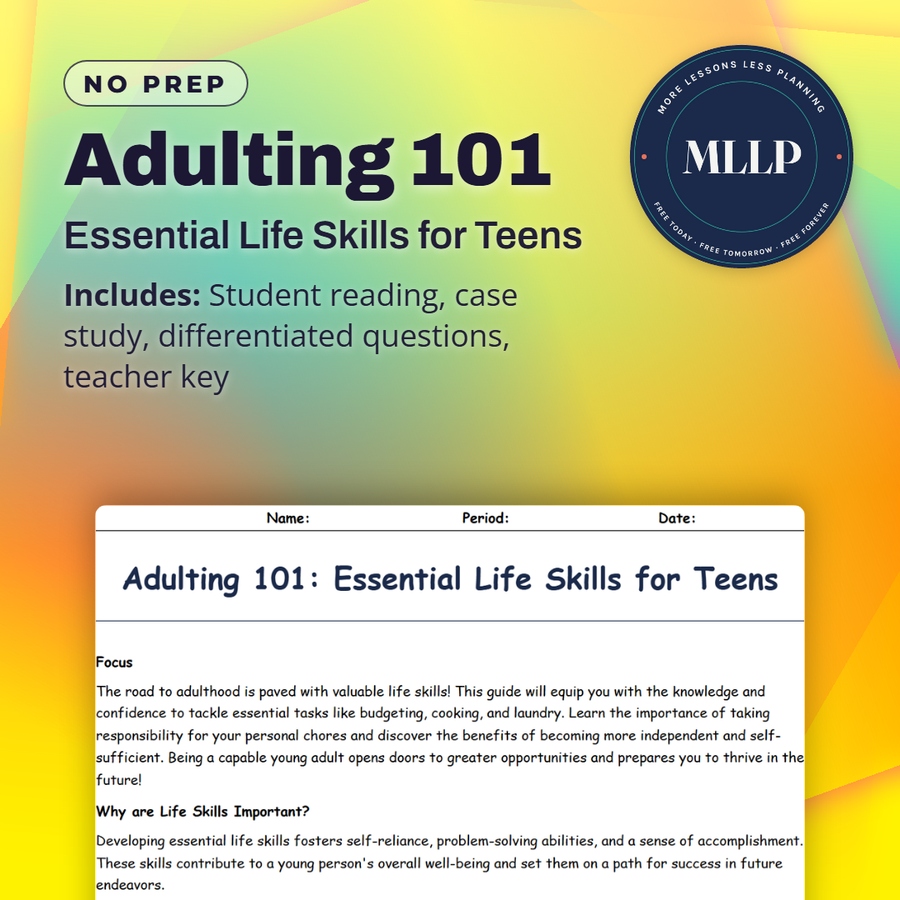
Adulting 101: Essential Life Skills for Teens

Adulting on a Budget: Saving for Your Future

Apartment Ready! Life Skills for College
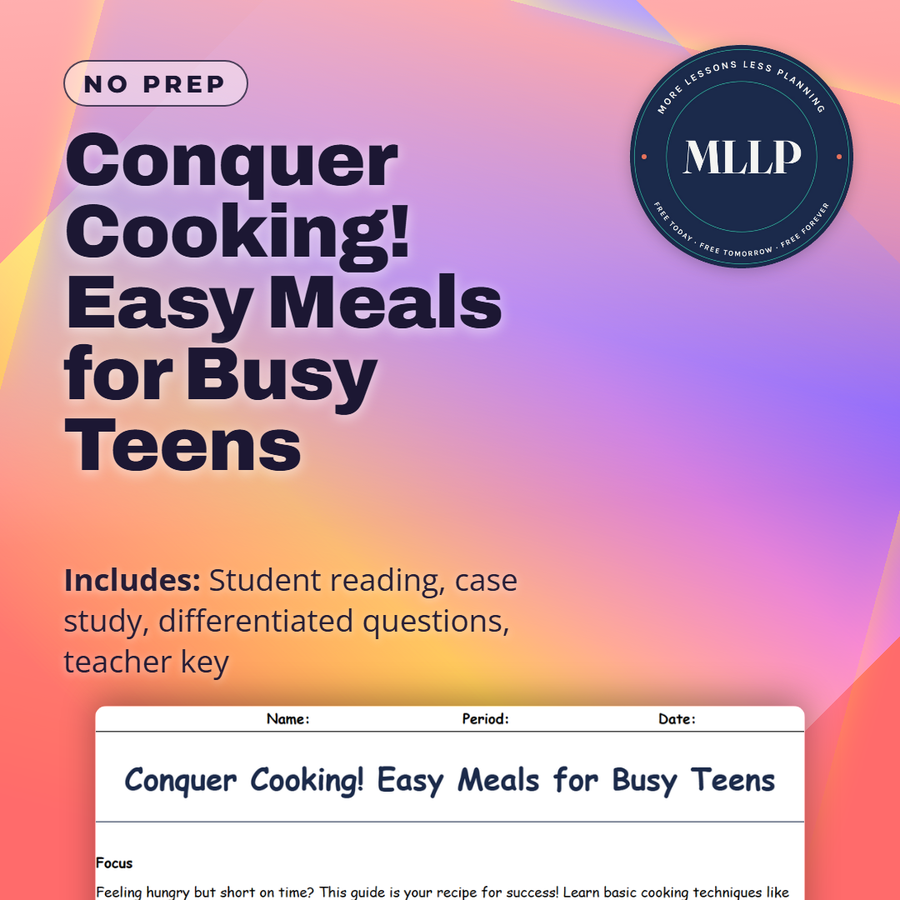
Conquer Cooking! Easy Meals for Busy Teens
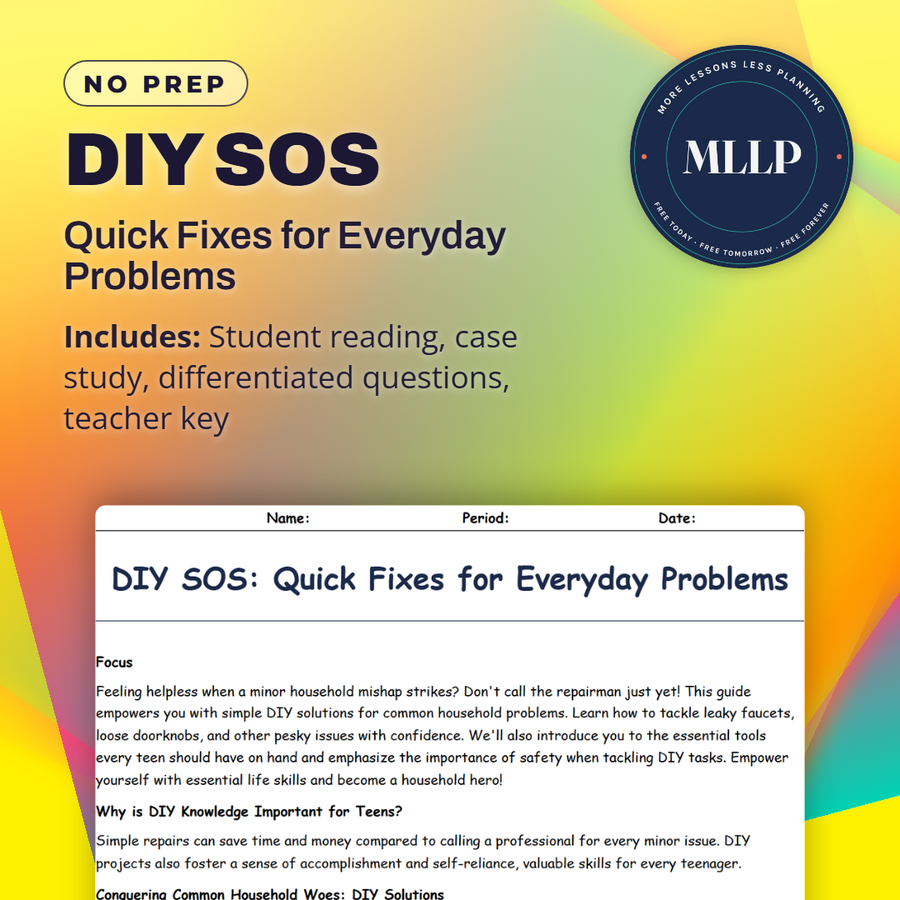
DIY SOS: Quick Fixes for Everyday Problems
Grocery Shopping Like a Boss: Teen Edition
Every lesson on this site is free to download and use. If one of them saved you a prep period, you can chip in a few bucks toward my three kids' daycare fund. That's genuinely where tips go.