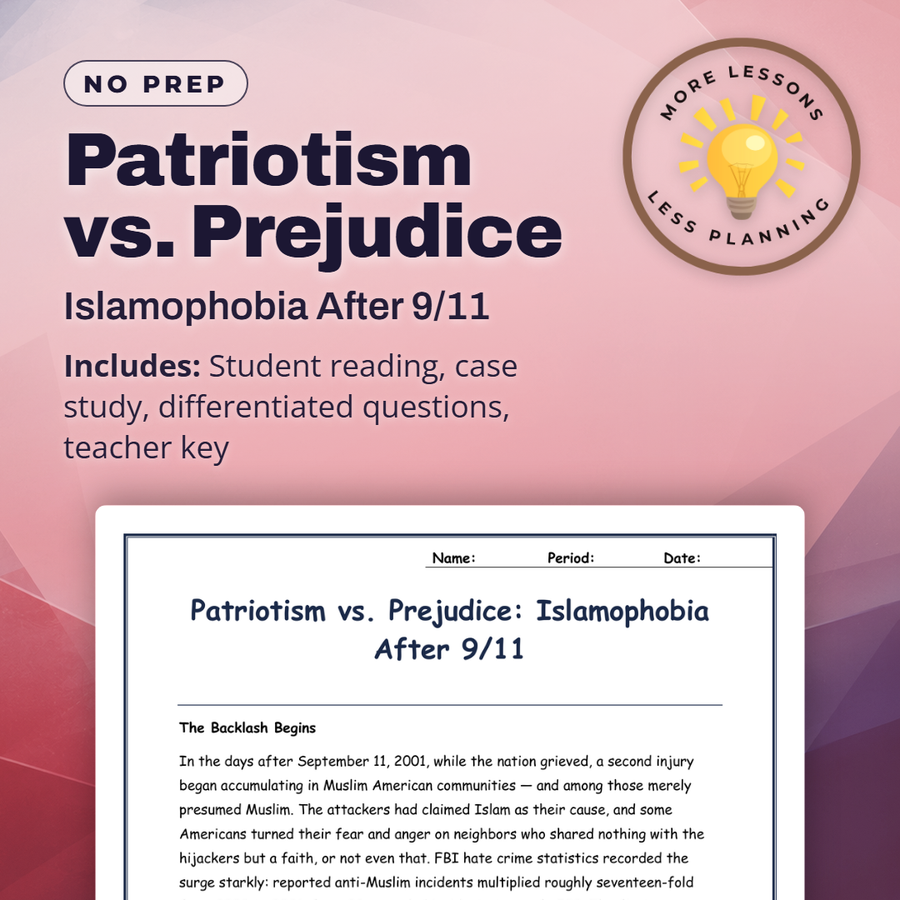
Patriotism vs. Prejudice: Islamophobia After 9/11
Quality reviewed September 2026
Facts verified September 7, 2026
- Subject
- Social Studies
- Grades
- Grades 9-12
- Length
- 9-page student worksheet
- Time
- About one 50-minute class period
- Great for
- Sub plans and independent work
- Includes
- Reading passage, comprehension questions + full answer key
- Format
- Print-and-go PDF
What students do
- Map the timeline of anti-Muslim incidents that followed 9/11 and the pattern of who was targeted
- Explain the psychological mechanism behind collective blame and how prejudice happens even among people who deny being prejudiced
- Analyze what Amira experienced when her religion suddenly made her a suspect in her own country
- Evaluate how some Americans used patriotism as cover for targeting innocent people
What it covers
- How trauma and fear can activate prejudice against groups seen as "the other"
- The cost of backlash on Muslim and Arab American communities, economically and emotionally
- The voices that stood against the tide and the risks they took to defend neighbors
Why this matters
Amira didn't do anything on September 11 except share a religion with the men who did. That was enough to make her a suspect in her own neighborhood for months. This reading follows what happened to her and to Muslim and Arab Americans, a crisis that unfolded on the same day as the one everyone remembers.
I teach it because prejudice under pressure is predictable, not rare, and pretending otherwise doesn't protect anyone. Some of the loudest defenders of Muslim neighbors during that period called it patriotism to stand up for them. Students need both halves: the fear that turned into targeting, and the people who refused to go along.
From one teacher to another
Students know the 9/11 attacks happened, but they don't always know that Muslim Americans had their own crisis that day: being treated as complicit for their faith. This reading is the hard conversation I need them to have about the difference between patriotism and prejudice, and how fear can override our stated values in seconds. It grounds abstract ideas about discrimination in the specific stories of people who lived it.
What you get
Download
Where should I send the next one?
Everything here is free and it stays that way. Leave your email and I'll send you the new lessons as they go up. You can unsubscribe from any one of them.
Related resources
Every lesson on this site is free to download and use. If one of them saved you a prep period, you can chip in a few bucks toward my three kids' daycare fund. That's genuinely where tips go.