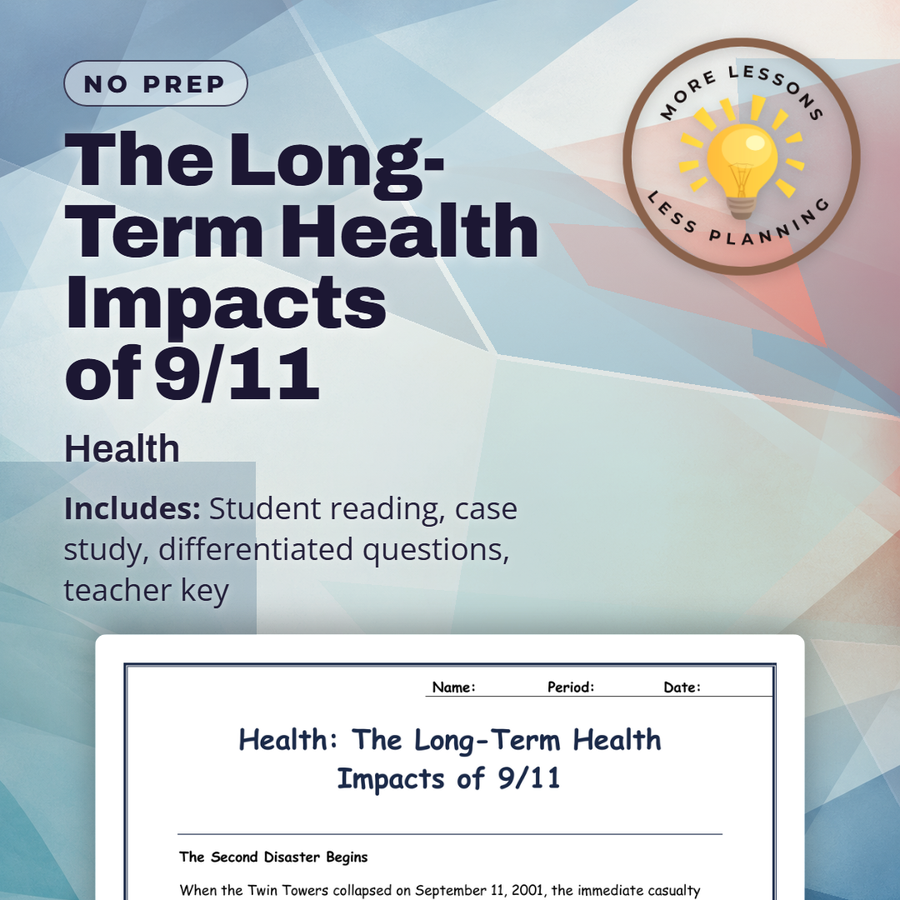
Health: The Long-Term Health Impacts of 9/11
Quality reviewed September 2026
Facts verified September 7, 2026
- Subject
- Health & PE
- Grades
- Grades 9-12
- Length
- 9-page student worksheet
- Time
- About one 50-minute class period
- Great for
- Sub plans and independent work
- Includes
- Reading passage, comprehension questions + full answer key
- Format
- Print-and-go PDF
What students do
- Identify the health effects documented: World Trade Center cough, asthma increases, chronic sinusitis, kidney disease, and cancers emerging over years
- Explain why responder illnesses appeared late: asbestos and other toxins damage lungs and organs slowly, and latency periods made the connection deniable at first
- Describe the World Trade Center Health Program: monitoring over 100,000 enrolled members, providing free treatment, and compensating illnesses linked to exposure
- Analyze the mental health impact: PTSD in responders and nearby residents, grief in victims' families, and the intergenerational trauma of children who lived through it
What it covers
- Occupational exposure: why responders who lacked proper protective equipment suffered disproportionately, and how that reshaped OSHA safety standards
- Epidemiology over decades: how researchers connect dust exposure to later health outcomes through long-term cohort studies and medical records
- Healthcare as reparation: the decision to provide free, permanent care to exposed people rather than asking individuals to prove causation in court
Why this matters
The World Trade Center Health Program is still enrolling patients, more than two decades after the exposure it treats. That fact alone tells students something the news cycle doesn't: disasters don't close on a schedule. Responders and residents who breathed the dust are still developing cancers and lung disease today, diagnosed on a delay their bodies set, not one anyone chose.
I use this in health classes because it forces students to think in decades instead of headlines. The program exists because doctors had to admit that reassurance wasn't the same as safety, and because proving a disease came from that exposure took years of records most people never see.
From one teacher to another
I use this for health and science classes because it shows that disasters do not end when the media stops covering them. The World Trade Center Health Program is still enrolling members, still treating illnesses, still documenting health outcomes that appeared fifteen, twenty years after the event. Students learn that environmental exposure science is forensic—you have to match exposure to outcome, and sometimes that takes decades.
What you get
Download
Where should I send the next one?
Everything here is free and it stays that way. Leave your email and I'll send you the new lessons as they go up. You can unsubscribe from any one of them.
Related resources

Every lesson on this site is free to download and use. If one of them saved you a prep period, you can chip in a few bucks toward my three kids' daycare fund. That's genuinely where tips go.