Surge Pricing: Uber, Hotels & Hurricane Plywood
- Slide deck
- Guided notes
- Guided notes teacher key
- Activity + answer key
- Quiz + answer key
- Exit ticket + answer key
- Teacher guide
- Teacher presentation notes
Where should I send the next one?
Everything here is free and it stays that way. Leave your email and I'll send you the new lessons as they go up. You can unsubscribe from any one of them.
Every file in this toolkit
Related resources
What students do
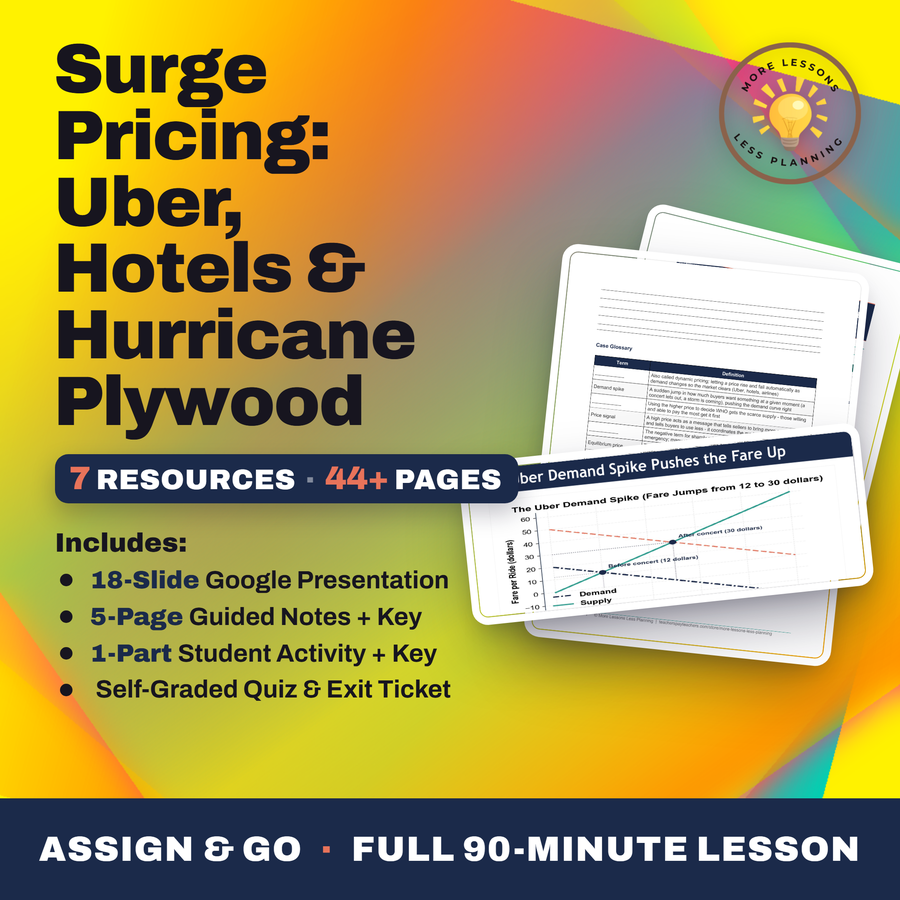
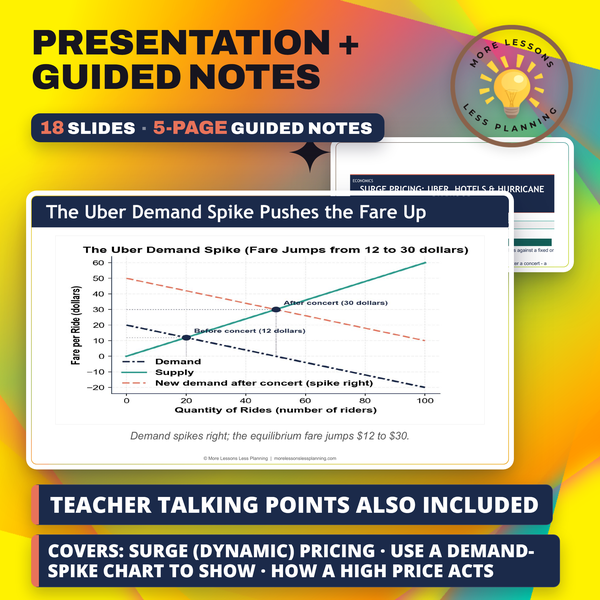
- Explain why an Uber fare jumps from $12 to $30 after a concert using a demand spike against a fixed supply of drivers
- Argue both sides of the debate over whether a price spike on hotel rooms during an emergency is price gouging or an efficient market signal
- Read a supply-and-demand chart to show how a $120 price cap below the $260 equilibrium creates a hotel room shortage
- Trace how a rising plywood price pulls quantity supplied from 2,000 to 5,000 sheets by drawing in out-of-town sellers
What it covers
- The two jobs a high price does at once, rationing scarce supply and signaling more of it to show up
- Three real surge markets side by side, Uber rides, hotel rooms, and hurricane plywood
- Both sides of the price-gouging debate, argued with the same supply-and-demand tools
Learning targets
- Explain surge (dynamic) pricing as a price that RISES when demand spikes against a fixed or slow-to-grow supply, to RATION the scarce supply
- Use a demand-spike chart to show why an Uber ride costs more at 2am after a concert - a MOVEMENT along the curve to a higher equilibrium price
- Explain how a high price acts as a SIGNAL that pulls more supply into a market (more drivers log on, more sellers ship plywood in)
- Argue both sides of the ethics debate: is a price spike unfair PRICE GOUGING, or an efficient market SIGNAL that rations supply and attracts more of it?
From one teacher to another
A price spike does two contradictory jobs at the exact same moment, it rations a supply that's running short and it signals more sellers to show up, and that tension is the whole point of the case study. Students run an Uber surge fare, a hotel-room shortage during an evacuation, and a plywood run before a hurricane through the same supply-and-demand chart, then argue whether each spike counts as gouging or a market doing its job. I kept the ethics debate genuinely open on both sides, because a case that only points one way doesn't teach the trade-off, it just teaches an opinion.
Every lesson on this site is free to download and use. If one of them saved you a prep period, you can chip in a few bucks toward my three kids' daycare fund. That's genuinely where tips go.